Full Download Haiku of Shiki MASAOKA and Picture of Fuji of Hokusai KATSUSHIKA - shogo kisaragi | PDF
Related searches:
Richard Wright, Masaoka Shiki, and the Haiku of Confinement by
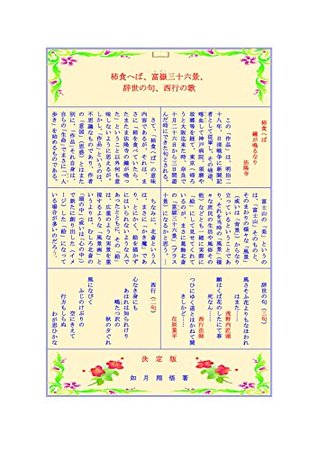
Haiku of Shiki MASAOKA and Picture of Fuji of Hokusai KATSUSHIKA
Masaoka Shiki and his haiku poems in English and Japanese
Teitoku and Shiki - Haiku
Introducing Haiku Poets and Topics . . . . . WKD: SHIKI - Reference
Examples of Haiku Poems: Traditional and Modern
Soseki and Shiki : their friendship in haiku and kanshi - UTAS ePrints
Masaoka Shiki Biography - Japanese poet, author, and literary critic
The Way of Haiku: Shiki and Modern Japanese Haiku Writers (1
Haiku and the Japanese love of brevity - Japanology
MASAOKA SHIKI: THE GOOD AND THE BAD – HOKKU
We have read and learnt about haiku poetry before: they usually follow the 5,7,5 syllable rule and matsuo basho, kobayashi issa, masaoka shiki, and yosa buson. Draw a picture or write to describe how your mind and body are feeling.
Not a few of shiki's haiku, using numbers in a variety of ways are found, indicating that this was indeed a technique he tried to develop as part of tools of his trade. Some other such examples of shiki's haiku on the theme of cockscombs include: - keito no shi-go hon aki no hiyori kana (masaoka shiki, 1900) cockscombs --four or five of them,.
(masaoka shiki image from wish lanterns japanese haiku haiku by basho japanese haiku, japanese poem, japanese quotes, very short poems.
A slightly more modern japanese poet, natsume sōseki, likens his breath to the wind in this haunting haiku. He learned the art of composing haikus from one of the four great haiku masters: masaoka shiki. As the art of the haiku traveled west, influential american writers like ezra pound picked up the craft.
Japanese haikujapanese housewish lanternsdiy projects smallikea.
During his early life, the old forms of poetry, such as haiku and haikai, were waning due to incongruity with the meiji period and there were no great living masters to help keep the traditions alive.
Those sheets of haiku hanging in wright’s studio recall the career of the japanese poet masaoka shiki (1867–1902), the greatest of all modern haiku masters, and a major influence on wright. It was shiki who, during the 1890s, revived haiku (a word he invented, to replace the older hokku ) in response to the cultural pressures of westernization.
Masaoka shiki (1867--1902) is credited with modernizing japan's two traditional verse forms, haiku and tanka. Born at a time of social and cultural change in japan, shiki welcomed the new influences from the west and responded to them by reinvigorating the native haiku and tanka forms.
Indeed, shiki wrote a haiku that goes “bitten by mosquitoes, i have written a draft analysing political parties”. It must have been this very same closeness to nature, for better or worse, that informed shiki’s poetry and made them seem familiar to so many people. Next to the shikido is an interesting graveyard with a fine memorial to shiki.
Masaoka shiki – october 14, 1867 – september 19, 1902), pen-name of masaoka noboru (正岡 升), was a japanese poet, author, and literary critic in meiji period japan. Shiki is regarded as a major figure in the development of modern haiku poetry.
Masaoka, shiki (1867 - 1902) company in 1892, he promoted a movement to reform haiku and tanka poems and advocated the use of realism.
The summer river: although there is a bridge, my horse goes through the water. Masaoka shiki, a poet, author, and literary critic in meiji period japan. Masaoka shiki was the pen-name of masaoka noboru (september 17, 1867 – september 19, 1902) born into a 'middle class' family and raised in the classical fashion.
Spring rain: browsing under an umbrella at the picture-book store looking up what a high pagoda in the autumn sky masaoka shiki poets access register now and publish your best poems or read and bookmark your favorite popular famous poems.
Selected haiku: masaoka shiki i’ve long been an admirer of good haiku, as opposed to much of what passes for haiku. So, it was a no-brainer for me to order the recently published a house by itself: selected haiku: masaoka shik after reading that shiki’s ideas have dominated modern haiku since his death.
Previously called hokku, haiku was given its current name by the japanese writer masaoka shiki at the end of the 19th century.
Many of shiki's haiku have the feel of photography when it captures life and time in moments.
With his expertise on the subject, many regard shiki as one of the four great haiku masters, along with yosa buson, matsuo basho, and kobayashi issa. Hailing from the city of matsuyama in the province of iyo, which is now known as ehime prefecture, masaoka shiki comes from a samurai class family with average means.
Japanese haiku: a poetic form of creative expression (with free infographic) it wasn't until the late 19th century that masaoka shiki, another respected hokku writer, to view the full size, visit my infographics page at freela.
Aug 23, 2018 tokyo -- an unpublished poem by haiku master masaoka shiki (1867-1902) has been found in one of his notebooks, the shikian preservation.
Posted on august 6, 2015 by soundofwaterdaily posted in haiku� masaoka shiki� peter beilenson tagged haiku�.
Dec 14, 2017 is celebrating its 19th-century haiku poet, masaoka shiki, who coined haiku- related events, including a recent haiku photo contest, a haiku.
Shiki is credited today with reviving the haiku forming and allowing.
Masaoka shiki is mostly known for having revitalized haiku in the time when, after centuries of isolation, japan opened.
The winter sun shines in: a life of masaoka shiki, by donald keene more importantly, the book covers shiki's reformation of haiku and tanka, and in writing poems with clear images—and it's worth noting that shiki was there.
Haiku is a japanese poem of seventeen syllables, in three lines of five, seven, and five, traditionally evoking images of the natural world.
This symposium marks the 150th anniversary of the birth of the haiku poet masaoka shiki (1867-1902).
Janine beichman wrote masaoka shiki: his life and works, first published in 1982 to comprehend that the power of haiku poetry is not only from clear images,.
Tico’s “autumn wind” haiku is interesting because it echoes this one by masaoka shiki: 春雨や傘さして見る繪草紙屋. The slight soft spring rain! opening up an umbrella to gaze at the colorful picture book store.
Masaoka shiki, poet, essayist, and critic who revived the haiku and tanka, traditional japanese poetic forms.
Many haiku lovers would add masaoka shiki to create the great four of haiku. You can two simple images speak worlds, in the hands of a skilled poet like.
1 by his criticism, the example of his own poetry, and of haiku',2 and went to work for kuga katsunan's nihon.
His poem speaks of a hawk on a spring day, flying down to the trees.
There were four master haiku poets from japan, known as the great four: matsuo basho, kobayashi issa, masaoka shiki, and yosa buson.
(1867-1902) masaoka shiki - modern revivalist of haiku (coined term). Image: ' amusing, diverting illustration' of a haiku - the haiku is written on the picture.
Rowing clear through the hazy dimness — the vast sea — masaoka shiki.
A “haiku” is a term created by the poet shiki masaoka (1867-1902); it is a very short and stylized form of japanese poetry, characterized by a “seasonal reference”, mostly drawn from nature, represented by the juxtaposition of two images or ideas, separated by a “cutting”.
Masaoka shiki (1867-1902) put effort into poetry activities to bring about innovation in the haiku from the edo period. In the seven years of his later years, he kept making haiku while suffering from tuberculosis. In 1867, masaoka shiki was born in iyo province (today’s ehime prefecture).
Observations of his surroundings, and created emotion in his work by manipulating the images he found.
In honor of masaoka shiki’s 150th anniversary, the mikan presents to you a haiku extravaganza featuring poetry from alts across ehime prefecture. Also featured are photos by michael haverty, depicting the impact of both shiki and soseki on present day matsuyama.
Nov 10, 2017 - explore mela korytowski's board haiku poems on pinterest.
Before bashō; matsuo bashō; yosa buson; kobayashi issa; masaoka shiki; after shiki.
Who is masaoka shiki in this japanese name, the family name is masaoka. Masaoka shiki (正岡 子規, october 14, 1867 – september 19, 1902), pen-name of masaoka noboru (正岡 升), was a japanese poet, author, and literary critic in meiji period japan. Shiki is regarded as a major figure in the development of modern haiku poetry.
Masaoka shiki 1857-1902 masaoka shiki, whose original name was masaoka tsunenori, was a poet and a writer born into a samurai family. In 1883, when he was about 26 years old, he went to tokyo for education and in 1885 he started to write poetry.
Masaoka shiki (1867-1902) - pseudonym of masaoka tsunenori� japanese writer usually credited with reviving the traditional japanese poetic form of haiku. Masaoka shiki was the founder of the magazine hototogisu and despite his brief life he became a highly esteemed critic in his time.
Haiku: the best of the masters (translations and original contemporary poems) two simple images speak worlds, in the hands of a skilled poet.
Oct 14, 2008 shiki masaoka was one of the greatest japanese poets of the 19th century - an acknowledged master of the art of haiku and tanka.
19, 1902, tokyo), poet, essayist, and critic who revived the haiku and tanka, traditional japanese poetic forms. He went to tokyo to study in 1883 and began to write poetry in 1885.
夏嵐 机上の白紙 飛び尽くす。 a haiku by masaoka shiki with commentary, definitions, and sound. Learn about a famous poem by one of japan's most famous haiku poets.
What is haiku poetry: format, rules and history; kawahigashi hekigoto’s haiku poems; takahama kyoshi’s haiku poems; yosa buson’s haiku poems; most famous 10 haiku poems in japanese and english; kobayashi issa’s haiku poems; masaoka shiki and his haiku poems in english and japanese; the examples of haiku poems about flowers; winter haiku.
Below is the one accompanying the photo about masaoka shiki writing his death haiku (used also as the book cover): shiki died of tuberculosis at the young age of thirty-four. In this scene, displayed in the shiki museum, he writes three death poems (jisei) in haiku form on september 18, 1902, one day before his passing.
Nov 17, 2017 - my life - haiku from masaoka shiki - masaoka shiki lived from 1867 to 1902, so fairly recent in the world of haiku. It is impressive that his haiku is regarded as meaningful as those of basho and other historic greats.
Read haiku master - masaoka shiki from the story haiku notes by eriegarden ( george) with 189 reads.
Read masaoka shiki poem:spring rain: browsing under an umbrella at the picture-book store.
Anyone can learn to use the form, although like other forms of poetry it is difficult to master. An online search will lead to many forums where new and experienced poets share and critique their haiku. The term haiku was created by the modern critic and haiku-maker masaoka shiki.
In japanese, haiku are traditionally printed in a single vertical line while haiku in english often appear in three lines to parallel the three phrases of japanese haiku. [6] previously called hokku, haiku was given its current name by the japanese writer masaoka shiki at the end of the 19th century.
Shiki-an (hermitage of masaoka since shiki propagated his ideas on innovations to haiku and tanka poems,.
Aug 20, 2013 altogether, his reforms made the haiku japan's most influential and encounters in his impressionistic portrait of this tragically young life,.
Masaoka shiki, poet, essayist, and critic who revived the haiku and tanka, watson tries to present a picture of why shiki is so important to the history of haiku.
Miya masaoka, koto, vocals and movement� an ancestor on my father’s side, shiki masaoka, was from matsuyama, japan, where he lived and worked during the nineteenth century and was a major figure in developing modern haiku and tanka poetry. He also wrote an experimental noh play (more info in bright red).
Masaoka shiki (1867–1902) is credited with modernizing japan's two traditional verse forms, haiku and tanka. Born at a time of social and cultural change in japan, shiki welcomed the new influences from the west and responded to them by reinvigorating the native haiku and tanka forms.
Haiku (俳句, listen (help info)) is a type of short form poetry originally from japan. Traditional japanese haiku consist of three phrases that contain a kireji, or cutting word, 17 on (a type of japanese phoneme) in a 5, 7, 5 pattern, and a kigo, or seasonal reference.
Masaoka shiki (1867 - 1902) shiki was an author, poet and literary critic and is credited as a major figure in the development and furthering of haiku poetry. Shiki argued that haiku was a legitimate literary genre and should be judged as other forms of literature.
Masaoka shiki (正岡 子規, october 14, 1867 – september 19, 1902), pen-name of masaoka noboru (正岡 升), was a japanese poet, author, and literary critic in meiji period japan. Shiki is regarded as a major figure in the development of modern haiku poetry, [3] credited with writing nearly 20,000 stanzas during his short life.
Post Your Comments: