Read Checks And Balances?: How A Parliamentary System Could Change American Politics - Paul Manuel | PDF
Related searches:
When democratic governments rise to power, the checks and balances of democracy usually prevent rogue action. This, our system of checks and balances, is a fundamental trait of our current democracy. The current system provides good checks and balances that ensure distribution is transparent and fair.
The number of checks and balances in a political system has a tremendous impact on the policy-making process, which in turn affects other aspects of the political system, including the independence of judges and the ability of bureaucrats to implement policy.
Checks and balances, or the separation of powers, is based upon the philosophy of baron de montesquieau. In this system the government was to be divided into three branches of government, each branch having particular powers.
The process of how laws are made (see the following page) is a good example of checks and balances in action. First, the legislative branch introduces and votes on a bill. The bill then goes to the executive branch, where the president decides whether he thinks the bill is good for the country.
If you've been wondering how many miles you've accrued in your frequent flyer accounts, here is the lowdown on all your options for tracking your miles, from website statements to mileage-tracker software.
Constitution that prevents any one branch from becoming predominant. Each branch of government has a certain amount of control over the other branches — in addition to its individual powers — to keep all branches in check.
First, identify weak points where internal theft is possible. If, say, one person makes a transaction, records it and reconciles the books, it's easy to cheat. Dividing up responsibility is a standard method of preventing employee embezzlement.
Finally, the judicial branch enacts its checks and balances largely through the supreme court. It can utilize the powers of judicial review to deem presidential actions, executive orders, treaties or laws as unconstitutional. Overall, these checks and balances keep each branch mostly equal in power.
How the checks and balances work in the 3 branches of government. Com) – the founding fathers established what they believed to be an ideal form of government by creating three separate branches: the legislative, executive, and judicial. To avoid one part from becoming too powerful, systems ensure that each branch is beholden to the other in various ways.
Checks and balances explores the three branches of america's government and how the government keeps itself in line by dividing the power between the legislative, the executive, and the judicial branches. The legislative branch is congress and it consists of the senate and the house of representatives.
Checks and balances is a system for making sure that one department does not exceed its bounds, or for guarding against fraud and errors. Government, the system of checks and balances is set to be a sentry over the separation of powers, balancing the separate branches of government.
Checks and balances definition: the system of checks and balances extends the restrictions established by the separation of powers. Each branch of government has the built-in authority and responsibility to restrain the power of the other two branches. This system makes government less efficient but also prevents tyranny by one branch of government.
The system of checks and balances allows each branch of government to have a say in how the laws are made. It also has the power to run the following checks over the executive branch. The legislative branch also has the power to remove the president from office.
If you work in india or malaysia, you're required to put at least 11 percent of your paycheck into an employees' provident fund (epf). Your employer puts 12 percent into it, and it serves as a type of savings account for retirement.
Checks and balances definition is - a system that allows each branch of a government to amend or veto acts of another branch so as to prevent any one branch from exerting too much power.
Checks and balances is the extension of separation of powers, which states that governmental power is divided into three branches: legislative, executive, and judicial. Checks and balances is the responsibility of each branch to check or restrain the power of the other two branches. This is used to make sure that no branch overpowers any of the other branches and that the power is balanced.
The constitution created three separate branches of the government: the legislative branch (congress), the executive branch (president), and the judicial branch (supreme court). In order to make sure that one branch didn't become too powerful, the constitution has checks and balances that enable each branch to keep the others in line.
Here are some of the checks and balances that exist today: congress can make laws, but the president can veto those laws. The president has the power to veto laws, but congress can override a president’s veto. Congress has the power to make laws, but the courts can declare those laws to be unconstitutional.
This blank check allows you to borrow cash or credit from your credit line — but is it worth it? looking for the perfect credit card? narrow your search with cardmatch™ looking for the perfect credit card? narrow your search with cardmatch™.
Checks and balances has a glossary to explain the terms used in the book. There is also a section directing the reader to further resources about our government. Part of the searchlight book series checks and balances provides an excellent look at the american government and a quick overview of how washington should work.
That system of checks and balances is a big part of the american system of government; and without it, democracy and representation simply do not work.
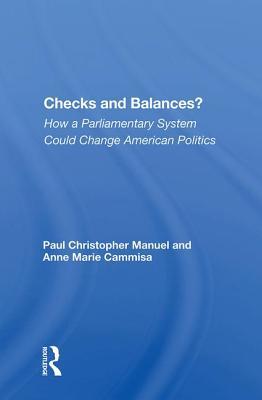
How a parliamentary system could change american politics illustrates how the constitutional system of checks and balances functions, including the separation of powers and the legislative process. This book is designed to help american readers better understand their own form of government, while expanding their knowledge of other governments.
From traveling to a new city to your regular bank branch closing, there are plenty of scenarios where you might find yourself needing to check your bank balance but unable to do so using your usual means.
Frequent drivers on illinois and indiana toll roads can purchase electronic devices called flatpak transponders, which are mounted onto a car's windshield.
The definition of checks and balances is simply a system for distributing governmental powers. Each branch of the government has specific procedures only they can follow that help protect against fraud, errors, and illegal actions.
Checks and balances, or the separation of powers, is based upon the philosophy of baron de montesquieau. In this system the government was to be divided into three branches of government, each branch having particular powers. Not only does each branch of the government have particular powers each branch has certain powers over the other branchs.
Government, as each branch exercises certain powers that can be checked by the powers given to the other two branches.
Here’s how the system of checks and balances works in practice in the united states: one branch is given the power to take a given action, and another branch (or branches) is given the responsibility to confirm the legality and appropriateness of that action.
Checks and balances: a look at the powers of government (searchlight books: how does government work?) is an excellent addition to any elementary school library. Checks and balances explains clearly the balance of powers between the three branches of the united states government.
Checks and balances are designed to prevent one part of the government from becoming too powerful and abusing its power. The government of the united states is divided into three main branches.
Thanks to the internet and smartphone apps, there are now more ways to check in for your flight than ever before. In most cases, you can use the airline's online check-in service up to 24 hours before your flight.
Checks and balances are various procedures set in place to reduce mistakes, prevent improper behavior, or decrease the risk of centralization of power.
The system of checks and balances keeps these three branches on government in cooperation. It allows each branch to run checks on the other two to make sure that the power is equally amongst the three. I believe this is a good concept to let each of the other branches check one another.
With checks and balances, each of the three branches of government can limit the powers of the others. Each branch “ checks ” the power of the other branches to make sure that the power is balanced between them.
The key to creating order across all facets of the organization is to have a good system of checks and balances. Accounting needs c- and s-wired team members who do the methodical recurring tasks with great accuracy. And it also needs d- and i-wired individuals who will look at the numbers with an eye for results, building, and innovation.
A system of checks and balances is fundamental to the united states’s federal government. The checks and balances ensure no one person or group has all the political power and can’t unjustly enforce their will on the nation’s citizens. The system is also intended to encourage cooperation, compromise, and debate between the branches of government.
As frustrating as it may seem to both sides in the nation’s heated debate over a border wall with mexico, constitutional experts say the ongoing battle between president trump and congress over the wall’s funding is how our system of government is supposed to work. Called “separation of powers” or “checks and balances,” the system was designed by our founding fathers to keep any single branch of government — executive, legislative, or judicial — from gaining too much power.
Checks and balances, principle of government under which separate branches are empowered to prevent actions by other branches and are induced to share power. Checks and balances are of fundamental importance in tripartite governments, which separate powers among legislative, executive, and judicial branches.
Post Your Comments: