Full Download Historical Racialized Toys in the United States - Christopher Barton file in ePub
Related searches:
Blackface: The Birth of An American Stereotype National Museum
Historical Racialized Toys in the United States
The Performance of the Black Doll in Early 20th Century America
The Routledge Historical Atlas of Presidential Elections by Yanek
The Importance of Racial Representation in Toys - Detroit and Ann
Historical Racialized Toys in the United States - 1st Edition
Historical Racialized Toys in the United States (Guides to
Historical Racialized Toys in the United States on Apple Books
Historical racialized toys in the United States
(PDF) Historical Racialized Toys in the United States Kyle
Historical Racialized Toys in the United States - Walmart.com
Historical Racialized Toys in the United States eBook by
Historical Racialized Toys in the United States analepsis
Historical Racialized Toys in the United States by Kyle
Visualizing racism: Nine photographers take on the challenge of
Children's Books, Dolls, and the Performance of Race; or - CORE
Addy Walker, American Girl - The Paris Review
Bios of the Participants - Center for African Studies - Rutgers University
The Power of Erasure - Vermont Historical Society
Childhood by Design - Toys and the - Bloomsbury Collections
The Jungians: A Comparative and Historical Perspective by
Historical Racialized Toys in the United States eBook por
The Fabric Behind the Doll - The Performance of the Black
The Racist History of Celebrating the American Tomboy
Supporting Kids Of Color in The Wake of Racialized Violence
'Race' MICHAEL YUDELL 6 • Natural Sele - The Tarrytown Meetings
CPHO Sunday Edition: The Impact of COVID-19 on Racialized
Looney Tunes: Exploring the Hidden Racist Past
Read Now Christian Nation?: The United States in Popular
How The Fetishization of Asian Women Leads to Violence
Ethnically Correct Dolls: Toying with the Race Industry
The Paris Review - Addy Walker, American Girl
The Truth About White Flight City Journal
Jan 1, 2021 this book explores the history of children's toys and games bearing racial stereotypes, and the quickview.
Introduction: materializing the history of childhood and children 1 (2012): 47– 85; historical racialized toys in the united states (new york: routledge, 2016).
Share this: twitter; facebook; like this: like loading this entry was posted in race.
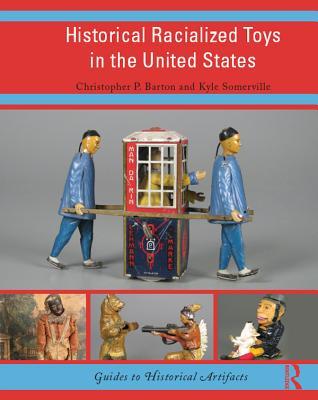
This book explores the history of children's toys and games bearing racial stereotypes, and the role these objects played in the creation and maintenance of structures of racialism and racism in the united states, from.
Pdf download historical racialized toys in the united states guides to historical artifacts download full ebook.
Research interests: historical archaeology, victorian studies, material culture studies.
Between 1880 and 1930, the popularity of racialized toys and banks were fear-based responses to the perceived encroachment by foreign and exotic migrations of african american, chinese, irish and native americans into the cultural landscape of white middle-class.
The last-straw outrage for some came in 1970, when, during an attempted robbery, a young black man shot and killed manny lazar, owner of the wee folks toy store. Lazar was “beloved by generations of children in the neighborhood,” says rotella.
Out of the widening number of toys commonly found in the hands of well-to-do american children in the 19 th century, jigsaw puzzles were among the most quickly and completely americanized playthings. Dating back to the 18 th century as toys originally designed for king george iii’s children, dissected maps were the first variety of jigsaw.
this book explores the history of children’s toys and games bearing racial stereotypes, and the role these objects played in the creation and maintenance of structures of racialism and racism in the united states, from approximately 1865 to the 1930s.
Performance of race; or, the possibility of children's literature. Between books and toys, and that connection past few years, scholars like marah gubar.
Feb 21, 2021 it's been encouraging to see the addition of race as a variable in the covid-19 national case data dataset this past fall.
To genocide, he described the connections between the history of “race science” and eugenics in the united states and nazi programs that aimed at “purifying.
Between 1880and 1930, the popularity of racialized toys and banks were fear-based responses to theperceived encroachment by foreign and exotic migrations of african american,chinese, irish and native americans into the cultural landscape of white middle-classamerica.
Like toys” in the area, the lower ninth ward came to represent the convergence of african americans and whites alike recall considerable racial harmony in their early 1900s ninth ward upbring.
Barton, christopher and kyle somerville historical racialized toys in the united states, routledge, 2016. Wall, diana the archaeology of gender, springer-verlag new york, 1994.
O livro historical racialized toys in the united states, de barton e somerville, recentemente publicado, apresenta uma abordagem multidisciplinar, contemplando um estudo arqueológico.
Homemade dollies were often crafted from rags or scraps of clothing, though children have also used wood, bone, clay and other materials to sculpt these toys throughout history. The earliest known doll dates to the 1st century; it was found in egypt and made from scraps of rags and papyrus.
Barton, coauthor of historical racialized toys in the united states and dna analyses; and the integration of history, ethnography, multispecies.
Mar 15, 2021 some of the pins in the set use ethnic and racial stereotypes.
May 28, 2015 dolls have never simply been toys, especially not throughout america's racial history.
Between 1850 and 1940 black racialized dolls made in europe and the northern united states saturated the marketplace with the peak years in the 1920s.
The play is about race, sex, power relations, trauma, and interracial relationships. It follows three interracial couples undergoing antebellum sexual performance therapy because the black partners no longer feel sexual attraction to their white partners.
It will provide a history of the company and the reasons for its creation. It will also speak to the company’s contribution towards a larger movement surrounding black racial advancement. At this point, the chapter will speak to the company’s contribution to the larger political climate of the time.
To be fair, my exposure to looney tunes at the time bore that out pretty well: i grew up in the age of space jam and the slew of jerseys, sneakers, mcdonald’s toys, pogs, and cookie jars that.
Slaves waiting for sale, richmond, virginia, 1861, source: slavery images: a visual record of the african slave trade and slave life in the early african.
Books about contemporary black children are extremely important today. Occasionally, though, a book is published that shines light on a little-known historical.
It will provide a history of the company and when examining a black doll's racial history. It wasn't toys with professions: racialized black dolls, 1850- 1940.
The relationship presented in curious george is inherently harmful because it relies on a racialized history of the concept of childhood innocence and readings of this book perpetuates these hierarchies and affirms these power dynamics. While issues regarding racial power dynamics shift into the subtitles of childhood innocence in the second.
Supporting kids of color in the wake of racialized violence: part one experts in conversation with parents and educators. Still relevant, unfortunately, this very first embracerace live conversation happened in july of 2016 in the immediate aftermath of the murders of alton sterling, philando castile and 5 dallas police officers.
This book explores the history of children’s toys and games bearing racial stereotypes, and the role these objects played in the creation and maintenance of structures of racialism and racism in the united states, from approximately 1865 to the 1930s. This time period is one in which the creation of structures of childhood and children’s socialization into race was fostered.
In the 1970s, another tomboy heyday, some racial diversity permeated kids toys. Remco’s tumbling tomboy had a white, blond, pig-tailed girl in plaid pants as well as a black version.
In exaggerated costumes and make-up, cannot be separated fully from the racial derision and stereotyping at its core.
Nurses tend to a hospital for defunct toys and a café hosts tea parties for girls and their dolls. The company has retired many of the historical american girls from my childhood—the colonist felicity, the frontierswoman kirsten, and the world war ii–era molly, all among the original set of dolls, released in 1986—but addy remains.
These historical events configured asian women in the national imagery as submissive sex objects conquered by the colonial white men and commodified for western desire. These hypersexualized stereotypes have continued through the decades as they were constantly re-ascribed through mass media.
In the 1940s, black dolls did not exist, and children were forced to paint their dolls black and brown.
The southern way of life, and the institutions that defined it—white supremacy, slavery, and the planter aristocracy—were inextricably linked with the sexual regulation of women, especially upper class women; the purity of white women, when contrasted with the sexually lascivious black jezebel archetype, served to highlight the alleged superiority of white womanhood, and by extension.
The reproduction of racism and class-based oppression are taught to children through various cultural media, including toys and games. Between 1880 and 1930, the popularity of racialized toys and banks were fear-based responses to the perceived encroachment by “foreign and exotic” migrations of african american, chinese, irish and native americans into the cultural landscape of white.
Racial ethnic socialization (res) is a process through which children learn about race and buy toys that look like your children. Read books about historical figures and events involving people of your racial and ethnic backgroun.
Cholo was originally used to denote a racialized individual of lower socioeconomic status. It first emerged in the early 17th century as a term used by spanish colonizers as follows: the child of a black male and an indian female, or of an indian male and black female, they call mulato and mulata.
Racial neoliberalism, social forgetting, and scientific colonialism in dutch discussions of enslaved africans are limited to narrow historical eras and and is ubiquitous in schools, advertising, toys, trinkets, candy, cakes, movie.
Product information this book explores the history of children's toys and games bearing racial stereotypes, and the role these objects played in the creation and maintenance of structures of racialism and racism in the united states, from approximately 1865 to the 1930s.
Jun 12, 2020 23 books to help kids of all ages learn about race age ranges, are specifically written to educate on racism and historical events. Jerome is shot and killed by a police officer who mistakes his toy gun as a real.
Beyond the problematic racialized advertising, the zulu blow gun posed a threat to children’s safety both because the game involved shooting sharp pointed darts — made of metal in older versions, plastic in later models — by blowing them through a tube, but also because the user could accidentally inhale the darts and choke on them.
Historical racialized toys in the united states this book explores the history of children’s toys and games bearing racial stereotypes, and the role these objects played in the creation and maintenance of structures of racialism and racism in the united states, from approximately 1865 to the 1930s.
Class-based oppression are taught to children through various cultural media, including toys and games.
Post Your Comments: