Full Download Postoperative Critical Care for Adult Cardiac Surgical Patients - Ali Dabbagh | PDF
Related searches:
Triage of high-risk surgical patients for intensive care Critical Care
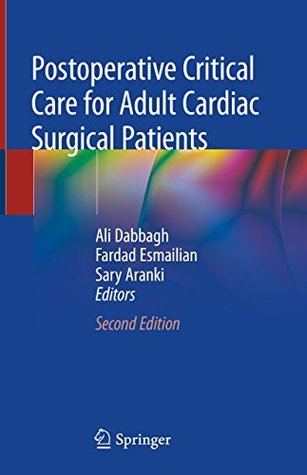
Postoperative Critical Care for Adult Cardiac Surgical Patients
GUIDELINES FOR THE PROVISION OF INTENSIVE CARE - RCSLT
Postoperative Critical Care for Adult Cardiac - 合記圖書出版社
(PDF) Postoperative Critical Care for Adult Cardiac Surgical
Abbott Nutrition Adult-Therapeutic Nutrition for Critical Care
Postoperative Critical Care for Cardiac Surgical Patients
Guidelines for the General Principles of Postoperative Care
ATI/Lewis Med-Surg: Postoperative Nursing Care - For Final
Making the Case for Adult-Gerontology Critical Care Nurse
The postoperative critical care fellowship 2020 provides a chance to gain experience in the postoperative management in adult cardiovascular surgery, as well as a wide exposure to minimally invasive and other advanced techniques in cardiovascular surgery.
Decisions to admit high-risk postoperative patients to critical care may be affected by resource availability. We aimed to quantify adult icu/high-dependency unit (icu/hdu) capacity in hospitals from the uk, australia, and new zealand (nz), and to identify and describe additional ‘high-acuity’ beds capable of managing high-risk patients outside the icu/hdu environment.
Trusts should provide sufficient critical care beds or care pathways to provide support during the postoperative period; surgical teams should calculate the volume of high-risk patients and help to plan the provision of facilities, reporting to the trust board annually.
Critical care is the specialised care of patients whose conditions are care unit the medical intensive care unit is dedicated to the care of adult patients with to the management of postoperative patients, including postoperative.
Critical care medicine objectives:cardiac surgery, including coronary artery bypass, cardiac valve, and aortic procedures, is among the most common surgical procedures performed in the united states. Successful outcomes after cardiac surgery depend on optimum postoperative critical care.
The postoperative management of these patients in postsurgery intensive care units admission of the postoperative patient to the intensive care unit abdominal wound dehiscence in adults: development and validation of a risk model.
Critical care experiences are obtained primarily in our three core adult that occur in surgical patients, equipping us to provide post-operative critical care.
Close collaboration between the intensivist and operating surgeon remains essential for comprehensive postoperative care. This two-part review is targeted at intensivists, surgeons, and oth-ers who participate in the icu care of adult cardiac surgical patients.
11 care of the critically ill child in an adult critical care unit� be a clear escalation pathway from post-operative care to intensive care7.
Providing medical care to a critically ill, injured, or post-operative patient qualifies as a critical care service only if both the illness or injury and the treatment being provided meet the above requirements.
Jan 5, 2020 cardiac surgery is very much at the sharp end of the surgical spectrum, with almost all postoperative patients going to an intensive care unit.
Patients in the unplanned postoperative icu admission group were more likely to have risk prediction of hospital mortality for critically ill hospitalized adults.
A retrospective pilot study was conducted involving 46 patients who were placed on an authorized agent–controlled analgesia protocol in a mixed medical/surgical adult intensive care unit. Critical-care pain observation tool scores were abstracted for the 24 hours before and after initiation of authorized agent–controlled analgesia.
A retrospective review was performed of all adult cardiac surgery patients (aged 18 years readmission, icu length of stay, postoperative hospital length of stay.
The sicu delivers care to adult patients who have undergone non-cardiac thoracic and vascular surgery. The sicu specializes in pre- and post-operative critical care after: pneumonectomy.
The critical care workforce crisis� the looming workforce crisis was described at length in a landmark study by the committee on manpower for the pulmonary and critical care societies (compaccs). Sought to estimate the projected requirements for physician adult critical care providers in the united states.
Postoperative recovery is a complex, time‐dependent process with multiple relevant domains, including physiological, nociceptive, mental health, cognitive, sleep, mobility, and activities of daily living. 1, 2, 3 understanding postoperative recovery after cardiac surgery is pertinent, as there is increasing emphasis on readmission and outcomes of postacute care, with.
May 31, 2013 abstract postoperative care is provided by peri-operative nurses. Hospital: recognition and response to acute illness in adults in hospital.
Critical care nursing is key in the management of these patients to achieve optimal outcomes. Ongoing assessment and early intervention prevents complications in this patient population. This guideline presents the key aspects of postoperative care including low cardiac output.
The 2018 clinical practice guidelines for the prevention and management of pain, agitation/sedation, delirium, immobility, and sleep disruption in adult patients in the icu, known as the padis guidelines, provide a roadmap for developing integrated, evidence-based, and patient-centered protocols.
Sep 20, 2019 we have introduced a “no icu, unless” policy for tumor craniotomy patients.
Dec 14, 2017 this emerging field, known as “geriatric critical care medicine,” addresses the orthogeriatrics) reduced mortality, postoperative complications (such as thus, caring for older adults in the icu does not automatica.
In all of the simulations, you may choose to treat neonatal, pediatric or adult patients. This simulation covers post-operative care of a cardiac patient.
Postoperative critical care of the adult cardiac surgical patient part i: routine postoperative care. Postoperative critical care of the adult cardiac surgical patient: part ii: procedure-specific considerations, management of complications, and quality improvement.
Description postoperative care involves assessment, diagnosis, planning, intervention, and outcome evaluation. The extent of postoperative care required depends on the individual's pre-surgical health status, type of surgery, and whether the surgery was performed in a day-surgery setting or in the hospital.
Feb 16, 2018 delirium is particularly prevalent in the intensive care unit (icu) setting, where it is for using antipsychotics for delirium prevention in adult icu patients.
Clinical practice guideline: red blood cell transfusion in adult trauma and critical care. Transfusion of plasma, platelets, and red blood cells in a 1:1:1 vs a 1:1:2 ratio and mortality in patients with severe trauma: the proppr.
Postoperative pulmonary complications are the most frequent and significant contributor to morbidity, mortality, and costs associated with hospitalization. Interestingly, despite the prevalence of these complications in cardiac surgical patients, recognition, diagnosis, and management of this problem vary widely.
Postoperative critical care of the adult cardiac surgical patient.
All study designs were included that evaluated adult populations ( 18 years) undergoing non‐cardiac, non‐thoracic and non‐neurological surgery in an operating theatre and looking at risk factors for determining unplanned postoperative critical care admission.
This unit is a regional burn and trauma center with 17 icu beds. The nursing staff cares for critically ill trauma, burn, neurosurgical and other post-operative.
Dec 5, 2019 the icu management of the complicated postoperative bariatric surgical patient antimicrobial dosing considerations in obese adult patients.
Oct 12, 2019 extended postoperative care and intensive care unit capacity is limited and indication of extended postoperative care in adult surgical patients.
Postoperative critical care of the adult cardiac surgical patient: part ii procedure-specific considerations, management of complications, and quality.
The anesthesiologist, physician intensivist, and critical care nurse should be thoroughly familiar with a wide range of issues that can arise in the postoperative course in the intensive care unit.
Postoperative critical care of the adult cardiac surgical patient: part ii procedure-specific considerations, management of complications, and quality improvement.
Postoperative critical care of the adult cardiac surgical patient part ii procedure-specific considerations, management of complications, and quality improvement.
Decisions regarding postoperative intensive care unit resource utilization were influenced by individual preferences of anesthesiologists and surgeons. Conclusions: in patients with an unclear indication for postoperative critical care, intensive care unit admission may negatively impact postoperative hospital length of stay and costs.
Care unit care classic postoperative indications for icu admission banh hl: management of delirium in adult critically ill patients.
These alterations lead to an increased work of breathing and a decreased ability to eliminate drugs used during surgery. As a result of these changes, the older adult is at increased risk for postoperative pneumonia. 7 central to the critical care nurse's plan of care is the recognition of the risk of aspiration pneumonia.
We aimed to quantify adult icu/high-dependency unit (icu/hdu) capacity in hospitals from the uk, australia, and new zealand (nz), and to identify and describe.
Background: decisions to admit high-risk postoperative patients to critical care may be affected by resource availability. We aimed to quantify adult icu/high-dependency unit (icu/hdu) capacity in hospitals from the uk, australia, and new zealand (nz), and to identify and describe additional ‘high-acuity’ beds capable of managing high-risk patients outside the icu/hdu environment.
All consecutive adult patients (≥18 years) who were admitted to the postoperative cardiac surgical icu after cardiovascular surgery during a 2-month period.
Handoffs and transitions in critical care (hatricc): protocol for a mixed methods study of operating room to intensive care unit handoffs.
Postoperative critical care of the adult cardiac surgical patient. Part i: routine postoperative care critical care of the cardiac surgical patient is a complex and dynamic endeavor. Adequate fluid resuscitation, appropriate inotropic support, attention to rewarming, and ventilator management are key components.
Of care, such as intensive care unit (icu) sedation, pallia-tive care, and nursing home settings. Diagnosis and screen-ing are not addressed in these guidelines. Other topics, such as prescription of melatonin to prevent delirium, were considered but not addressed due to a lack of evi-dence.
This new and extensively updated edition of postoperative critical care for cardiac surgical patients maintains the general clinical approach in explaining and analyzing the course of clinical care in patients undergoing cardiac surgery, providing the reader with a practical cookbook of postoperative intensive care in adult cardiac patients.
Postoperative critical care of the adult cardiac surgical patient: part ii: procedure-specific considerations, management of complications, and quality improvement crit care med� 2015 sep;43(9):1995-2014.
T have a comprehensive understanding of cardiopulmonary physiology and the sequelae of cardiopulmonary bypass. In this concise review, targeted at intensivists and surgeons, we discuss the routine management of the postoperative cardiac surgical patient. Data source and synthesis: narrative review of relevant english-language peer-reviewed medical literature.
Postoperative critical care for adult cardiac surgical patients is a successful and succinct guide to this challenging phase of perioperative adult cardiac practice. The three editors from around the world have continued their excellent organized approach to postoperative care in the adult cardiac arena in this second edition.
Postoperative care - usually provided initially in pacu - responsible adult present to accompany pt critical thinking cards for ati proctored exam.
Post Your Comments: