Download The Reading Culture of Early Christianity: The Production, Publication, Circulation, and Use of Books in the Early Christian Church - Edward D. Andrews | PDF
Related searches:
The Link Between Culture and Education
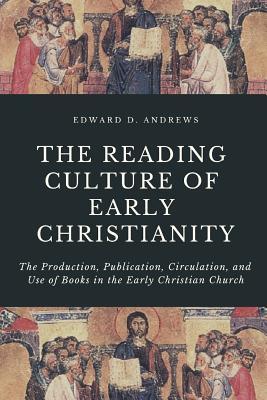
The Reading Culture of Early Christianity: The Production, Publication, Circulation, and Use of Books in the Early Christian Church
Early Literacy: Policy and Practice in the Preschool Years Reading
Women, Reading, and the Cultural Politics of Early Modern
The Pilgrim and the Bee: Reading Rituals and Book Culture in
Culture and reform in the early nineteenth century (practice
Reading and print culture - The British Library
The Benefits of Reading to Babies and Infants Bright Horizons®
Early reading and the education inspection framework - Ofsted
Religion, culture and belief in the early modern world
Language and Literacy Development in the Early Years
THE READING CULTURE OF EARLY CHRISTIANITY: The Production
The Reading Culture of Early Christianity by Edward Andrews
The importance of early reading - Cornerstones Education
Reading culture: Why every student should embrace it The
Creating a Reading Culture (Even When You're Low on Time and
Librariesand reading culture in the High Empire (Chapter 18
Enhancing the Culture of Reading in Rwanda - Journal of Pan
Chivalry, Reading, and Women's Culture in Early Modern Spain
The Sooner, the Better: Early Reading to Children - Frank
Intimate culture of families in the early socialization of literacy
History of reading: An introduction to reading in the past: 11 Reading
Literacy and Literature in Popular Culture: Reading and
The Role of Early Oral Language in Literacy Development
Literacy and Culture - Students, Reading, Language, and American
25 Ways Schools Can Promote Literacy And Independent Reading
Dutch institutional reading culture in the early - Research Explorer
Early Reading and Writing Development
How Reading Books Fosters Language Development around the World
A Century of Reading: The 10 Books That Defined the 1990s
Reading the Early Modern Passions: Essays in the Cultural
Research that proves the incredible benefits of reading to
National Association of the Deaf - NAD
The Growth of Literacy in Western Europe from 1500 to 1800
African and African-American Culture: Early Elementary Books
The History of Reading City of Reading, Pennsylvania
A Century of Reading: The 10 Books That Defined the 1970s
Literacy in Early Childhood and Primary Education (3-8 years)
The early childhood literacy teaching toolkit explained
ERIC - EJ496370 - Cultural Assumptions and Early Years
Impact of Reading Ability on Academic Performance at the
The Culture of Childhood: We’ve Almost Destroyed It
Children need to enter school with basic reading, math, social and emotional skills. From birth to age 5, when a child’s brain develops rapidly, is the time to build the foundation of cognitive abilities and character. These early skills are necessary for success in school, health, career and life.
Jmv haburemyi, a lecturer in the department of early childhood and primary education at university of rwanda’s college of education, says having a good reading culture eases research. “when one has developed a good reading culture from childhood, they spend less time on research compared to their counterparts who will struggle to pick information from books because they have not developed this skill,” he says.
The culture channel contains articles on everything from religion and traditions to history and geography. Advertisement topics to explore: history people why 'poop' and 'wiggle' are funny words, accord.
In my reading, and in my survey of practicing and building on the skills and values of the adult culture.
Abstract literacy and literature have been fundamental in discussions of popular culture in the early modern period. On the one hand, popular culture, defined negatively in contrast to elite culture, has often been seen as the culture of the illiterate, a culture transmitted orally by customs and practice, not through the printed word.
With 1 in 10 children under 5 years of age experiencing some degree of difficulty in learning language and communication skills, early identification is crucial.
Middle-class readers and the culture of success in the early twentieth-century united states.
The story that went viral earlier this year about the teacher who had the genius idea of installing a basket of books on her school’s bus has a crucial message behind it: small acts can have a big impact when it comes to fostering a culture of reading in your school and community.
The first cultural studies reader to also address visual literacy, reading culture features a striking four-color format and includes visual and verbal texts of diverse.
Practice: culture and reform in the early nineteenth century this is the currently selected item. Arts and humanities us history the early republic (1800-1848) culture and reform in the early nineteenth century.
Early reading with your child is a true one-on-one opportunity for children to communicate with their parents and parents to communicate with their children. It allows children to grow their vocabulary skills with exposure to new words and listening skills they develop from hearing someone read to them that become vital to their academic success.
Timothy shanahan and christopher lonigan explore the connection between early oral language development and later reading comprehension success supporting young children’s language and literacy development has long been considered a practice that yields strong readers and writers later in life. The results of the national early literacy panel’s (nelp) six years of scientific research.
Starting in first grade, teachers read the stories aloud to classrooms. One of the participating schools is kanyinya primary school in ruhango district in rwanda's.
Of new brunswick) closely analyzes how the reading of early modern englishwomen is represented in writing and art, including devotional works, poetry, household and maternal books and fiction by katherine parr, anne askew, dorothy leigh, elizabeth grymeston, aemelia lanyer and mary wroth, and examines how such representation figured in private and public life for such women.
Hence, reading instruction is most significant and so is the way a child learns how to transform symbols into sounds and then into meaningful words, sentences and paragraphs (shaywitz, 2003). Another significant factor to consider when discussing reading acquisition is home culture and parents' role.
During early speech and language development, children learn skills that are important to the development of literacy (reading and writing). This stage, known as emergent literacy, begins at birth and continues through the preschool years.
Journal of early childhood literacy is a fully peer-reviewed international journal. Since its foundation in 2001 jecl has rapidly become a distinctive, leading voice in research in early childhood literacy, with a multinational range of contributors and readership.
An award-winning team of journalists, designers, and videographers who tell brand stories through fast company's distinctive lens what’s next for hardware, software, and services our annual guide to the busine.
As they grow and develop, their speech and language skills become increasingly more complex. They learn to understand and use language to express their ideas, thoughts, and feelings, and to communicate with others.
Early reading and phonics remain areas for improvement, particularly for pupils who struggle. They have attempted to bring together several phonic schemes that do not match.
The history of books became an acknowledged academic discipline in the 1980s. Contributors authors had, for the first time, to deal with the idea of the “reading public” for the first time.
Reading then will be irresistible daily behaviour and part of their life. Creating the culture of reading and eventually making it a habit for kids from their early ages will not happen overnight of course. It should be started since the early days of childhood, parents need to read for their kids every now and then to build their interest.
Books with pictures and age-appropriate words hold a young child's attention, and adding sound effects of funny voices can make reading time even more special. Developing reading skills at an early age exposes children to words, ideas and text before entering school.
Dec 3, 2019 the education week survey paints the first nationally representative picture of how k-2 teachers instruct students to decode, or identify new words.
A supportive school reading culture is an educative context in which there is availability, opportunity, first published april 16, 2019 research article.
He therefore argues that it is incumbent upon parents and early school educators to cultivate a lifetime reading habit into children.
“a whole child approach” to the study of culture and early learning is a continuing challenge. The study of culture and early learning involves the interweaving of biological and cultural factors. Active development of subcultures aiming at expanding and enhancing learning is one promising current approach.
When children learn to read at an early age, they have greater general knowledge, expand their vocabulary and become more fluent readers. They also have improved attention spans and better concentration. Early readers can recognize a larger number of words by sight, which enables them to learn more from and about their environment.
Religion, culture and belief in the early modern world - professor helen parish. Historians of the european reformation have increasingly been drawn towards studies of the period that are based less around an 'ecclesiastical' approach to the period, and more around an analysis of religion, culture and belief - the impact of the reformations upon faith, belief, life and culture.
Studies of book reading have found evidence that children begin to benefit when regular reading begins as early as 8 months and that children benefit most from regular reading routines that include sensitive and responsive, language-rich interactional routines.
The experiences they have daily help to shape a foundation for their mental development and growth for years to come.
The intimate family culture for early literacy socialization was documented for a socioculturally heterogeneous sample of 66 children enrolled in pre-kindergarten.
The first step in developing a strong school culture of independent reading is to think about three broad areas: • what happens within the whole school to promote.
In 1990, when houghton mifflin published the book, vietnam was still recent history, its individual and collective wounds far from healed. Just as the years between combat and publication affected o’brien’s perception of events, so has an almost exactly equal span changed the character of the writing.
Women, reading, and the cultural politics of early modern england. A study of the representation of reading in early modern englishwomen's writing, this book exists at the intersection of textual.
In reading and writing, such cultural models may be influenced by ethnicity, are considered archaic and inappropriate in the twenty-first century); in addition,.
Our brands we are no longer supporting ie (internet explorer) as we strive to provide site experiences for browsers that support new web standards and security practices.
Cultural assumptions and early years' pedagogy: the effect of the home culture on minority children's interpretation of reading in school. Gregory, eve language, culture and curriculum� v7 n2 p111-24 1994.
Research indicates a powerful correlation between students' reading enjoyment, motivation and achievement. This australian case study investigates how reading for pleasure (rfp) approaches are demonstrated in the teaching of reading in a stage 1 (6‐year‐old to 7‐year‐old students) classroom. The methodology was designed to mirror aspects of cremin's 2014 uk‐based study, teachers as readers.
Enjoy thrilling novels, beautiful photo books and keepsake nostalgia collections.
Chivalry, reading, and women's culture in early modern spain contests this view, arguing that the surprisingly egalitarian gender politics of spain's most.
Teacher knowledge, respect and support for the diversity of children's families, cultures, and linguistic backgrounds are important in early literacy development.
Instead of blindly matching a student with the first science fiction book that comes to mind, for example, these lists provide students with many options within their.
Learning the conventions of print through early exposure to books, children begin to learn about the conventions of reading in their own language. For example, very young children using books in english learn that they are read from front to back, from the left of the page to the right, and from the top of the page to the bottom.
A study of the representation of reading in early modern englishwomen's writing, this book exists at the intersection of textual criticism and cultural history. It looks at depictions of reading in women's printed devotional works, maternal advice books, poetry, and fiction, as well as manuscripts, for evidence of ways in which women conceived of reading in sixteenth- and early seventeenth-century england.
Snap shot of the early years: at ages three and five, children who are read to just once a week are four times more likely to have behaviour problems than children who are read to daily. At the ages of three and five, children who are read to daily do better in all tests that predict how well they will get on at school – including how well they talk, knowing their numbers, shapes and colours.
This study assumes that reading performance is related to academic performance at the secondary level. If a correlation exists at earlier grade levels, it may suggest that early reading intervention programs will benefit all other academic disciplines.
Listening to stories and discussing them are very important activities in early childhood classrooms (slegers, 1996). For very young children, who normally have very short attention spans, story times work best when they are short (about 5-10 minutes) and conversational.
Aug 14, 2019 in my book, the ten-minute principal (corwin, 2019), i suggest ways to create an impact by using time more effectively.
Books to read for pleasure, including good-quality picture books for early years. The school library should promote equality, diversity and inclusion. It is important that the school library is at the heart of developing a whole-school reading culture.
The reading culture of early christianity provides the reader with the production process of the new testament books, the publication process, how they were circulated, and to what extent they were used in the early christian church.
Dutch institutional reading culture in the early nineteenth century: an exploration and a comparison.
Early african american print culture presents seventeen original essays that demonstrate how the study of african american print culture might enrich the study of print culture, while at the same time expanding the terrain of african american literature beyond authorship to editing, illustration, printing, circulation, and reading.
Supporting young children’s language and literacy development has long been considered a practice that yields strong readers and writers later in life. The results of the national early literacy panel’s (nelp) six years of scientific research synthesis supports the practice and its role in language development among children ages zero to five.
Print culture article by: matthew taunton in the 19th century, more people were reading more publications than ever before. Dr matthew taunton explains how technological, social and educational change made this possible.
Knowledge of these concepts is essential to conventional reading and writing in english. Children with print awareness will begin to understand how written language is connected to oral language. Oral language skills are linked to the code-related skills that help word reading to develop and they also provide the foundation.
The results obtained indicate that early schooling, as well as the socio-economic and cultural background of families, has a positive effect on students’ results in reading comprehension.
That's why it's important for educators to identify and understand how culture impacts early childhood development in order to help all children feel safe, confident, and loved.
This book is a study of children, their books and their reading experiences in late sixteenth- and seventeenth-century britain. It argues for the importance of reading to early modern childhood and of childhood to early modern reading cultures by drawing together the fields of childhood studies, early modern literature and the history of reading. Analysing literary representations of children as readers in a range of genres (including abcs, prayer books, religious narratives, romance,.
Reading to babies contributes to the development of their growing brains and gives them a good start towards a lifelong love of reading and good literature. When you read to infants, it can also help language development as they are taking in information and beginning to learn about speech patterns.
Early text cultures is a multi-disciplinary project created for discussion of common and similar text types—defined by formal, thematic, or sociocultural features—across ancient and pre-modern text cultures. The project is intended to help students of different regions of the pre-modern world to meet and exchange ideas without being confined to the conventional discourses of particular disciplines.
Children who have lots of experiences with books absorb the rhythms and patterns of language and, at surprisingly early ages, begin to imitate the language and gestures their parents and caregivers use while sharing stories, sometimes turning pages and murmuring as they “read” the pictures.
From our reading, we can begin to understand what it must have been like to live in a particular time, under certain conditions, in different parts of the world.
A cultural practice is defined as being an object, event, activity, social grouping, or language that people use, produce, and reproduce throughout the event of their normal, everyday lifestyle.
• early readers reap benefits that last a lifetime reading begins at birth parents should begin reading aloud to children at birth. It feeds the child’s hungry brain with data for language development, speaking, and early word reading. It’s a wonderful way to bond and leads to cognitive, social, and emotional development.
Latin remained important as a core subject in post-elementary education throughout the early modern period and much culture, even in the age of enlightenment, was the classical culture of the ancient greeks and romans. During the eighteenth century, speaking, reading and writing french came to replace latin for cultural and intellectual purposes – at least for the elites of catholic and perhaps orthodox europe.
Early reading is a significant focus for ofsted, but with good reason. If we can work to involve parents early on and create a culture where communication, language and reading skills are highly valued, we can support all children to be successful lifelong learners.
Children can learn reading and writing in their earliest years, long before they go to school (national early literacy panel report, 2008). • a nother strand of infant research that sheds light on fundamental early-reading abilities stems from auditory and visual discrimination.
Early models of the reading process give a unique perspective on reading and emphasise an information processing approach. An interactive model of reading incorporates elements of both bottom-up and top-down approaches and proposes to describe and explain how the perceptual and the cognitive processes in reading interact (rumelhart, 1994).
The pilgrim and the bee: reading rituals and book culture in early new england the pilgrim and the bee: reading rituals and book culture in early new england.
Below are 25 ways schools can create a reading culture for independent literacy. “books and bagels” can be a perfect duo for an early morning book club.
On your morning commute, if you take public transit), and you’ll be surprised at how much more focused you are once you get to the office. Additional information: if you find staying focus hard and re trying to improve your focus, it’s possible you’ve been doing it wrong�.
Mar 6, 2020 in particular, wright argues that the greco-roman world had a widespread reading culture in which one person read a text to others.
In 1748, the town was laid out by thomas and richard penn, the sons of william penn. The name was chosen after penn's own county seat, reading, in berkshire, england. During the french and indian war, reading became a military base for a chain of forts along the blue mountains. The local iron industry, by the time of the revolution, had a total production that exceeded that of england, a production that would help supply washington's troops.
These, along with many more life-giving books, make up the majority of our black history and culture reading in the early elementary years. And during this time, i take careful precautions to pre-read every single thing in order to avoid exposing my youngest children to “really good” books that hurt.
11 reading culture in the victorian underworld 'london labour and the london poor', first serialised in the established newspaper, the morning chronicle,.
Post Your Comments: