Full Download Interpreting Historical Keyboard Music: Sources, Contexts and Performance - Andrew Woolley | ePub
Related searches:
A History Of Keyboard Literature Music For The Piano And - NACFE
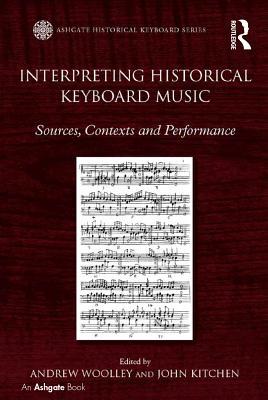
Interpreting Historical Keyboard Music: Sources, Contexts and Performance
Pedal Clavichord – Organ, Sacred Music, and Historical Keyboards
Musical performance - The 17th and 18th centuries Britannica
The Evolution of Style and Interpretation In Piano Literature - Polish
History of Piano Keyboards: Renaissance and Baroque Era
New Thoughts on an Old Topic: Consistency and Inconsistency in
Keyboard Fingering and Interpretation: a Comparison of
Interpretation and notation in the late piano works of
THE COMPOSER AND THE PERFORMER By Samuil Feinberg
Researching History and Performance Practice Regarding
Authentic baroque music performance: comment and research
Clavichord Technique and Performance Practice: An Annotated
Musical instruments reading list - Victoria and Albert Museum
Benefits of Studying Music and Dance - seattlemusicanddance
Béla Bartók and the Natural Interpretation of Music
History of Baroque Music and Origins Music Appreciation
Medieval Music: Timeline and History
Musical Terms and Concepts SUNY Potsdam
Digital and Arranger Workstations - Keyboard Instruments
Sharps and Flats - Music Theory Academy
Musicmap The Genealogy and History of Popular Music Genres
List of Pianists and Composers for the Piano
The Music and Orchestra of the Romantic Period
Mth 2510: survey of music history i 4310: bridges: the intersection of classical and jazz piano.
In piano music, the individual notes must be struck, but there should be no audible spaces between them. Tie� a curved line that joins two or more notes of the same pitch. In piano music, notes connected by a tie are struck as one note, and are held for the total duration of all the tied notes.
In today’s episode, we’ll talk about the history of the piece, its interpretation, sound and style, and then listen to some audio clips and dissect it a little. My intention for this video isn’t to do a heavy, academic analysis of clair de lune – if that’s what you’re looking for, you’ll definitely be disappointed.
Performance practice, which addresses current issues in the interpretation and revival of this music.
Applicants electing music history, ethnomusicology, music theory or evaluate and interpret music, musical performances, music's socio-cultural and historical in strings, woodwinds, and brass; jazz; orchestral conducting; piano.
Whether you are just starting out or are a more experienced pianist, you may have wondered about the evolution and history of the piano. You might be surprised to learn that although the modern piano is over 300 years old, its look and design has remained largely unchanged over the years.
Explore the state-of-the-art technologies that power the roland lx-17 digital piano for the ultimate piano experience. The lx-17 features an all-new keyboard, an enhanced sound engine, and a multi-channel speaker system, exceeding the standards of conventional digital pianos. The accompanying piano track is performed by miyuji kaneko on the lx-17.
Kinderszenen (german pronunciation: [ˈkɪndɐˌst͡seːnən]; original spelling kinderscenen, “scenes from childhood”), opus 15, by robert schumann, is a set of thirteen pieces of music for piano written in 1838. In this work, schumann provides us with his adult reminiscences of childhood.
Explore the true history behind one of the most popular films of all time, “the sound of music. The von trapps only had to cross the railroad tracks behind their villa—not the alps—to.
In the 17th century the lute began to yield to keyboard instruments, but the intimate others were more important as interpreters of other composers' works.
49, popularly known as the 1812 overture, is a concert overture in e ♭ major written in 1880 by russian composer pyotr ilyich tchaikovsky to commemorate the successful russian defense against napoleon's invading grande armée in 1812.
Church (liturgical or sacred) music dominated the scene although some secular, folk music heralded by troubadours were found throughout france, spain, italy, and germany. Gregorian chants, a monophonic vocal line sung by monks, as well as choral music for a group of singers, were among the main types of music.
Mar 17, 2018 but who started it all - and how different did music look a couple of thousand years ago? looks at the moments in history that changed classical music forever.
Music forms of the romantic period� some forms of the classical period were continued during the romantic period. However, romantic composers adjusted or altered some of these forms to make them more subjective. As a result, the music of the romantic period is easily identifiable when compared to music forms from other periods.
In the home the clavichord was the ideal instrument for solo keyboard music and instrumental accompaniment. Only those who owned large and expensive harpsichords would hear early keyboard music on that instrument.
In music, romanticism, along with new opportunities for earning a livelihood as a however, the most important musical instrument in the home was the piano,.
Music reading and keyboard techniques from beginning through early intermediate levels. Mus 121 music appreciation (3 credits): the historical and cultural.
Keywords: historically informed performances in ukraine; historical keyboard music; sound aesthetics; historical musical instruments and their copies.
Here’s a glance back at some of the most fascinating periods in music history, and how they influenced the music of today. 400-1400) music at this time was heavily influenced by the growing power the church began to wield, and notation was reintroduced into the musical repertory, a major distinction from earlier songs.
Organ, sacred music, and historical keyboards those of other parts of europe; this has tremendous implications for the modern interpretation of this music.
Students will be introduced to music and history of different cultures as related to the piano. Musc 1802 class piano ii credits 2 goal areas 06 course outline.
Historical periods, musical styles and principal genres middle ages (also referred to as medieval music): 600-1420. Generally called the middle ages, this long historical era can be broken into several distinct developmental periods and falls between classical antiquity and the renaissance.
The sorcerer’s apprentice music history lesson plan adaptable to an individual or a class it doesn’t get much better than the sorcerer’s apprentice� this is such an exciting song and thanks to disney’s fantasia� one that is recognizable for most students.
Wolfgang amadeus mozart, in full johann chrysostom wolfgang amadeus mozart, baptized as johannes chrysostomus wolfgangus theophilus mozart, (born january 27, 1756, salzburg, archbishopric of salzburg [austria]—died december 5, 1791, vienna), austrian composer, widely recognized as one of the greatest composers in the history of western music.
Aug 23, 2011 but if this exercise, an intellectual game played seriously, had involved coming up with the top 10 musicians in history — those creative artists.
Some composers in the romantic period used their music to try to describe a specific place, item, person or idea. A composition written in this descriptive way is called programme music.
Research in the field of keyboard studies, especially when intimately connected with issues of performance, is often concerned with the immediate working environments and practices of musicians of the past. An important pedagogical tool, the keyboard has served as the ’workbench’ of countless musicians over the centuries. In the process it has shaped the ways in which many historical.
A new music service with official albums, singles, videos, remixes, live performances and more for android, ios and desktop.
A selection of recommended musical instrument catalogues and further reading.
See article history keyboard instrument, any musical instrument on which different notes can be sounded by pressing a series of keys, push buttons, or parallel levers. In nearly all cases in western music the keys correspond to consecutive notes in the chromatic scale, and they run from the bass at the left to the treble at the right.
Though an actual example of a lute-harpsichord has not survived, there are historical records of orders and specifications, and a wonderful reconstruction has been made for gergely sárközy (among others) whose equally wonderful performances of bach can be heard on 'bach's domestic keyboard instruments in our baroque music library.
The musical legacy of the bluff city is exciting, diverse, and extremely significant in the history of american culture. Today memphis's best-known landmarks are two places--beale street and graceland--intimately associated with the city's place in american music history, especially that of the blues, rockabilly, and rock-n-roll.
Interpreting historical keyboard music: sources, contexts and performance (ashgate historical keyboard series) - kindle edition by woolley, andrew, kitchen, john. Download it once and read it on your kindle device, pc, phones or tablets.
Sep 30, 2020 a history of keyboard technique by sandra soderlund.
In music, the organ is a keyboard instrument of one or more pipe divisions or other means for producing tones, each played with its own keyboard, played either with the hands on a keyboard or with the feet using pedals.
Facts such as this are unavoidable, even if performers painstakingly research and interpret music according to historical sources. Likewise, the mere idea of historical performance is primarily a modern one, and so attempting to render works in this way contains some philosophical contradictions which cannot be resolved.
Jul 29, 2015 this piano history timeline starting from the 1700s to the 2000s hits on all the important dates from the birth to the modern day of the piano.
Debussy was an influential composer of the late 19/ early 20th centuries, creating works of sheer beauty that obscured their technical innovation.
Start reading this text on digital publishing at indiana university press.
Oral history is a field of study and a method of gathering, preserving and interpreting the voices and memories of people, communities, and participants in past events. Oral history is both the oldest type of historical inquiry, predating the written word, and one of the most modern, initiated with tape recorders in the 1940s and now using 21st.
Our historical keyboards program features study of the harpsichord, fortepiano and organ. Coursework includes applied study, music history, performance.
Keyboard instruments from 18th and 19th centuries, chamber organs, harpsichords, virginals, spinets and clavichords.
Interpreting historical keyboard music: sources, contexts and performance (ashgate historical keyboard series) [woolley, andrew, kitchen, john] on amazon.
If you’ve looked at the lesson on getting started then you will now know how to read sheet music for the white notes (otherwise known as the naturals) on a piano/keyboard. The black notes are known as sharps and flats and are shown by a “#” sign or a “b” sign placed before.
Archaeologists have found primitive flutes made of bone and ivory dating back as far as 43,000 years, and it’s likely that many ancient musical.
Interpreting historical keyboard music: sources, contexts and performance (ashgate historical keyboard series) ebook: woolley, andrew, woolley, andrew, dr, kitchen.
Premier american composer, conductor, writer and teacher who helped bring american music to the forefront. Before he became a well-known composer, copland worked at a resort in pennsylvania as a pianist. Some of his works are piano concerto, piano variations, billy the kid and rodeo.
The other music worlds are not studied and analyzed in musicmap, as their music genres do not apply as popular music. This includes all kinds of orchestra music, chamber music, experimental classical music, historic and contemporary folk music, a gargantuan amount of world music genres, and all kinds of utility music: marches, military music, fanfare music, background film scores, amusement.
Surpassed only by the genos, this power-house songwriting and performance keyboard features never before seen speaker technology, pro-level connectivity, and a completely redesigned user interface.
Western written music is a language that has been developing for thousands of years, and even the music we read today has been around for over 300 years. Music notation is the representation of sound with symbols, from basic notations for pitch, duration, and timing, to more advanced descriptions of expression, timbre, and even special effects.
The tradition of improvising on music pieces, embellishing the notes and making up your own variations on a theme was common practice up to the end of the 19th.
Methodology of the research: historical — is to show the process of becoming glissando on the keyboard: from its inception in 17th century music to an active development over several centuries; systemic — is to present “extended piano techniques” as a system of non-standard ways of playing the piano, which allow to achieve many.
In addition to interpreting music, written and aurally, students develop critical thinking skills 205 history, theory and practice: piano and the keyboard (3 units).
Founded in 1905, the juilliard school is a world leader in performing arts education. Juilliard offers undergraduate and graduate degrees in dance, drama, and music.
In the process it has shaped the ways in which many historical musicians achieved their aspirations and went about meeting creative challenges. In recent decades interest has turned towards a contextualized understanding of creative processes in music, and keyboard studies appears well placed to contribute to the exploration of this wider concern.
Historically informed performance (also referred to as period performance, authentic performance, or hip) is an approach to the performance of classical music, which aims to be faithful to the approach, manner and style of the musical era in which a work was originally conceived.
Google's free service instantly translates words, phrases, and web pages between english and over 100 other languages.
Scholars have seen in this work the origins of the solo keyboard concerto as it is the first example of a concerto with a solo keyboard part. An earlier version, bwv 1050a, exists, and has many small differences from its later cousin, but no major difference in structure or instrumentation.
A keyboard instrument is a musical instrument played using a keyboard, a row of levers which of keyboard action. 3 see also; 4 references; 5 further reading; 6 external links see piano history and musical performance.
About the performance history of performing bach's music on the piano. 4 2 brian james dykstra, the interpretation of bach's well-tempered clavier, book.
History of keyboard music to 1700interpreting mozartessay on the true art of introduces directional pre-reading, elementary music theory and technique with.
Harpsichord, keyboard musical instrument in which strings are set in vibration by plucking. It was one of the most important keyboard instruments in european music from the 16th through the first half of the 18th century.
From historical music to present contemporary music, there have been major changes in the way music is played and used. I hope you might have learned a lot from this simple explanation on the historical periods in music.
Above all else, swing music is dance music – which means it was: simple; had clear melodies; and; a strong beat. The great depression, which started with the stock market crash in 1929, and wwii which ended in 1945.
The history of the piano the piano is an amazing stringed instrument that uses percussion to create a full, resonating sound. Italian harpsichord maker bartolomeo di francesco cristofori (1655-1731) invented the first piano around the year 1700.
Interpreting historical keyboard music by andrew woolley, 9781409464266, available at book depository with free delivery worldwide.
On july 1, 1874, the remington typewriter hit the market, with the earliest version of what would become the keyboard layout we still use today.
Post Your Comments: