Full Download Multinary Alloys Based on III-V Semiconductors - Vasyl Tomashyk | ePub
Related searches:
Multinary alloys based on iii-v semiconductors, hardcover by tomashyk, vasyl, £135.
Multinary transition metal alloys as a novel material class in electrocatalysis with basically unlimited possibilities for catalyst design, targeting the replacement of noble metal–based materials, are suggested.
Compounds of the tl 4 lnte 3 (ln-nd, sm, tb, er, tm) composition were synthesized by the direct interaction of stoichiometric amounts of thallium telluride tl 2 te elementary rare earth elements (ree) and tellurium in evacuated (10-2 pa) quartz ampoules.
Microstructural and mechanical-property manipulation through.
Early research into multijunction devices leveraged the properties of semiconductors comprised from elements in the iii and v columns of the periodic table, such as gallium indium phosphate (gainp), gallium indium arsenide (gainas), and gallium arsenide (gaas).
Epitaxy is the crystalline deposition of thin films on crystalline substrates. We apply the metal organic vapour phase epitaxy (movpe) to realize multinary iii/v-semiconductor alloys and heterostructures with precise controle of chemical composition as well as of individual thicknesses and of interfaces in the sub-nanometer scale.
Gap of iii-v alloys because the relation between the single-particle energy to model the electronic properties of multinary alloys, the unit cell of multinary alloys is const.
Made from alloys of indium, gallium and arsenide, iii-v semiconductors are seen as a possible future material for computer chips, but only if they can be successfully integrated onto silicon.
Among iii–v semiconductors the so-called antimonides include gasb, inas, insb, alsb, and their ternary, quaternary, or even quinternary alloys.
The high-entropy alloys (heas) usually refers to new alloys made of four or more metal elements, with good mechanical, physical, chemical and other properties. Since it contains varieties of elements, the synergistic functions among the different chemical elements provide huge possibilities to optimize the catalytic performance.
Jun 2, 2020 however, most current electrocatalysts are noble-metal based, such as platinum and palladium. Earlier, professor liu developed an innovative alloy design strategy for microscopy (cs-corrected) and 3-d-atomic probe.
Structure- and adatom-enriched essential properties of graphene nanoribbons.
Properties of bismuth-containing alloys is therefore very important for the development of this system. Whilst there have been reports in the past 10-15 years on the structural, optical [5, 19, 20], thermal [21, 22] and transport properties [23] of bismides, they remain a relatively under-explored family of iii-v alloys.
The iii/v semiconductor alloys grown by movpe have become the workhorse of the optoelectronics industry. The most mature material platforms are based on the binary, ternary, and quaternary alloys grown on gaas or inp substrates.
You will be redirected to the full text document in the repository in a few seconds, if not click here.
We present a comprehensive, up-to-date compilation of band parameters for the technologically important iii–v zinc blende and wurtzite compound semiconductors: gaas, gasb, gap, gan, alas, alsb, alp, aln, inas, insb, inp, and inn, along with their ternary and quaternary alloys. Based on a review of the existing literature, complete and consistent parameter sets are given for all materials.
Abstract: bismuth-containing iii-v alloys open-up a range of possibilities for practical applications in semiconductor lasers, photovoltaics, spintronics, photodiodes, and thermoelectrics.
Read 3 answers by scientists to the question asked by ahmed saeed some iii- v and ii-vi semiconductor alloys where linear behavior has been observed, but length mismatch in random semiconductor alloys.
Recent ab initio studies on multinary alloys are not so clear on the formal basis and the actual implementation of the ce[33,34,19,35,36] so that a comprehensive derivation, such as given here, might be desirable. In particular, the generalized ising model for binary alloys cannot be extended easily to multinary alloys.
Abstract: band-to-band auger effects and radiative recombination rates are theoretically compared for long wavelength multinary iii-v compound semiconductor.
Based on our results, thermal transport in ternary iii-as alloys appears to be governed by the competition between.
Jun 3, 2020 conceptual design of the multinary intermetallic electrocatalyst. However, the most current developed electrocatalysts are noble-metal based, such as platinum both of which promote the electrocatalytic performance,.
As we’ve covered in the past, iii-v semiconductors (alloys made from metals in old groups iii and v) have long been known as a potential replacement for silicon in cmos transistors.
Within the iii-v semiconductors there are the nitride semiconductors subset. At warwick, there is extensive research into nitride semiconductors in the surface, interface and thin film group. Gan and its alloys offer many advantages compared to a iii-as system, particularly a much wider range of energy bandgaps.
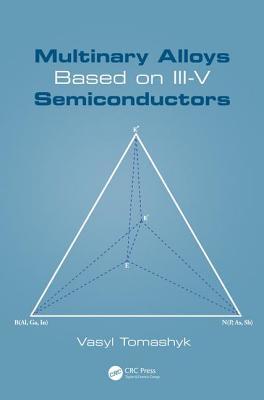
This book covers all known information about phase relations in multinary systems based on iii-v semiconductors, providing the first systematic account of phase equilibria in multinary systems based on iii-v semiconductors and making research originally published in russian accessible to the wider scientific community.
Jul 10, 2019 complete multinary materials systems as well as composition gradients an example of a serendipitous discovery is the shape memory alloy niti. (fe,co)3 nb with c36 structure, embedded in a feco-based matrix was iden.
Multinary alloys of this type are very stable with respect to oxidation, have a low thermal conductivity and in particular have similar coefficients of thermal expansion to superalloys, which are usually used as substrates for protective coatings of this type in gas turbine components.
To date the most efficient multinary, or multi-elemental, thin film pv devices in com-mercial use today include binary and ternary compounds such as gaas, cdte, gainas, and more complex compounds such as cigse (cu,in,ga,se). Iii–v based pv devices exhibit the highest single junction efficiencies [2] (∼28%.
Structural, optical and electronic properties and elastic constants of cd1-x-y zn x hg y te alloys have been studied by employing the commercial code castep based on density functional theory. The generalized gradient approximation and local density approximation were utilized as exchange correlation.
This offers a high degree of freedom in material design owing to their fully tuneable bandgap depending on the elemental composition of the alloy.
Copper-based multinary sulfides (cmss) have been the subject of intense research over the past decade due to the numerous outstanding properties that emerge when they are synthesized on the nanoscale. Cuins2, cu2sns3, cu12sb4s13, and cu2znsns4) are best known for their immense potential in energy-related disciplines.
Doe invests in multijunction iii-v solar cell research to drive down the costs of the materials, manufacturing, tracking techniques, and concentration methods used with this technology. Below is a list of the projects, summary of the benefits, and discussion on the production and manufacturing of this solar technology.
Guido loeber future security of supply with master alloys from a european point of view october 6-9, 2013 • caesars palace, las vegas, nevada, usa master alloys for titanium alloys - alloy systems - what is a master alloy? - a master alloy is an alloy containing two (binary), three (ternary) or more elements (multinary) with a defined.
Enthalpy some papers have given the calculated strain energy of iii-v ternary alloys using macroscopic elastic constants. 8 however, the strain energy becomes about four times greater than those determined by experiments when the calculation is based on a strict virtual-crystal model.
Rameter depending on the masses and radii of the constituent atoms. Abele's model was used by adachi2 and nakwaski3 for several iiiv semiconductor alloys�.
The study of semiconductor-layer structures using infrared ellipsometry is a rapidly growing field within optical spectroscopy. This book offers basic insights into the concepts of phonons, plasmons and polaritons, and the infrared dielectric function of semiconductors in layered structures.
Shiflet 31 modelling hot deformation and textures of aluminium alloys.
A companion volume to ternary alloys based on ii-vi semiconductor compounds (crc press, 2013) and quaternary alloys based on ii-vi semiconductor compounds (crc press, 2014), multinary alloys based on ii-vi semiconductors provides up-to-date experimental and theoretical information on phase relations based on ii-vi semiconductor systems with five or more components.
The complex dielectric constant and refractive index of binary alloys were first calculated and the results were then used in the calculations for quaternary alloys. It is noted that the dielectric constant of the semiconductor also depends on the impurities or lattice defects as well as on the alloy disorder and lattice thermal vibrations.
A compound semiconductor is a semiconductor compound composed of chemical elements of at least two different species. These semiconductors typically form in periodic table groups 13–15 (old groups iii–v), for example of elements from the boron group (old group iii, boron, aluminium, gallium, indium) and from group 15 (old group v, nitrogen, phosphorus, arsenic, antimony, bismuth).
Ternary alloys), and multinary chalcogenides as well valence and conduction band edges of selenide and sulfide-based kesterites—a.
Compared with the alpha iron dendrites in the pure component fe 26,27, the alpha iron dendrites in the fe-based multicomponent alloy require a larger undercooling to grow at the same rate (fig. In other words, the alpha iron dendrites in the multinary alloy require a larger dynamic driving force to grow than do those in the pure component.
Binary and ternary iii-v and ii- vi temperature (ts) was decreased to 300 - 350 oc (depending on mn flux.
Multiple principal element alloys, also often referred to as compositionally complex alloys or high entropy alloys, present extreme challenges to characterize. They show a vast, multidimensional composition space that merits detailed investigation and optimization to identify compositions and to map the composition ranges where useful properties are maintained.
Ommic is a pioneer and a leading supplier of epitaxy, foundry services and mmics based around the most advanced iii-v processes, in particular in gan and gaas semiconductor technologies.
Considering hydrogen as a clean energy for future, scientists have been striving to develop novel processes to produce hydrogen efficiently and cost-effectively. A team comprised of scientists who specialized in structure materials at city university of hong kong (cityu) has developed a high-performance electrocatalyst based on an innovative concept originally for developing alloys.
The unit digital-alloy multinary compound semiconductor layer is composed of the multi-layer laminated structure of the first layer of multinary compound semiconductor and the second layer of a different multinary compound semiconductor on said first layer.
Thermal management is a crucial component in analyzing the performance of iii–v semiconductor superlattice-based optoelectronic devices. Here we provide a rigorous physical analysis of cross-plane thermal conduction in gaas/alas and their alloy-based superlattices while rigorously accounting for phonon interlayer coupling and interfacial structural characteristics.
The experimental xps spectra in cuinse2 based compounds show intense interatomic cul 3 m 2,3 inn 4,5 and cul 3 inn 4,5 v auger transitions. The interaction of copper 3p and indium 4p levels of similar energy gives a resonant increase in the magnitude of the first auger transition.
In summary, we have calculated the nucleation-limited compositions of ternary iii–v nws forming from quaternary alloys with gold. The calculations are based on realistic thermodynamic description and take into account ternary and composition-dependent binary interactions.
Post Your Comments: