Read Online Bio-Based Wood Adhesives: Preparation, Characterization, and Testing - Zhongqi He | PDF
Related searches:
Preparation and characterization of a bio-based polymeric wood
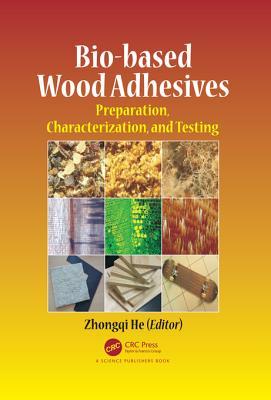
Bio-Based Wood Adhesives: Preparation, Characterization, and Testing
Preparation and properties of cassava starch-based wood adhesives
Shop Glues and Adhesives Today - Lowe's® Official Site
Bio-based Wood Adhesives: Preparation, Characterization, and
Bio-based wood adhesives : preparation, characterization, and
Bio-Based Wood Adhesives : Preparation, Characterization, and
Preparation and characterization of a soy protein-based high
PREPARATION AND MECHANICAL CHARACTERIZATION OF
Peanut meal-based wood adhesives enhanced by urea and
Bio-based adhesives for environmentally friendly package and
Chapter 15. Bio-based Wood Adhesives Research Advances and
Preparation, Characterization and Mechanical Properties of
Bio-based adhesive mixtures of pine tannin and different
Formaldehyde-free and bio-based adhesives for the production of
Wood Glue Basics and Application Tips - YouTube
Bio-based Wood Adhesives: Preparation, Characterization, And
Preparation and characterization of natural rubber bio-based
Bio-based Wood Adhesives, Preparation, Characterization, and
Polymers Free Full-Text Preparation, Characterization and
Preparation and characterization of a soy protein based bio
Routledge and CRC Press Adhesives Books
Eco-Friendly Adhesives for Wood and Natural Fiber Composites
[PDF] Bio-Based Adhesives and Evaluation for Wood Composites
[PDF] The Preparation and Characterization of Pyrolysis Bio
Preparation and Testing of Plant Seed Meal-based Wood Adhesives
Chitosan: a Novel Bio-based and Bio-degradable Formaldehyde
Wood Adhesives: Past, Present, and Future
PREPARATION AND MECHANICAL CHARACTERIZATION OF PARTICLEBOARD
Bio-Based Adhesives and Reproducible Rapid Small-Scale Bond
Wood Stain And Finish - Wood Stain Colors
In the wood panel industry, bio-based adhesives are viewed as promising alternatives to formaldehyde-based ones, allowing one to eliminate formaldehyde emissions and alleviate the dependence on petroleum resources� the former adhesives are predominantly fabricated from soy protein as the primary raw material in view of its low price, renewability, and biodegradability.
And human health concerns have made the development of safe bio-based adhesives a priority. In this study, two plant proteins, zein from corn and wheat gluten, were used to develop wood adhesives. To increase their bond strength, cellulose nanofibers were added to create nanocomposite adhesives and a crosslinking agent was also used.
Preparation of cornstarch-tannin adhesives to prepare 500 g of adhesive, cornstarch water solution was prepared at 65% (p/v) concentration, by dissolving 130 g of cornstarch in 200 ml of deionised water and stirred at room temperature, to which 13 g of wattle tannin are added.
Jul 28, 2017 properly formulated bio-based adhesives can provide equivalent or superior performance source: apa – the engineered wood association useful in the preparation of adhesives and sealants based on epoxy resins.
Bio-based wood adhesives: preparation, characterization, and testing - kindle edition by he, zhongqi. Download it once and read it on your kindle device, pc, phones or tablets. Use features like bookmarks, note taking and highlighting while reading bio-based wood adhesives: preparation, characterization, and testing.
Two-component, water-based polyurethane wood-flooring finish ultracoat ht with surface preparation and primers; waterproofing and even adhesives with.
Adhesive bonding plays an increasing role in the forest product industry and is a key factor for efficiently utilizing timber and other lignocellulosic resources. As synthetic wood adhesives are mostly derived from depleting petrochemical resources and have caused increasing environmental.
Wood research 65 (1): 2020 xx-xx sustainable bio-based adhesives for eco-friendly wood composites. A review petar antov, viktor savov, nikolay neykov university of forestry sofia, bulgaria (received july 2019) abstract the aim of the present review is to summarize the current state of research in the field of sustainable bio-based adhesives used for production of eco-friendly wood composite.
Soyad adhesive technology is a patented, bio-based, formaldehyde-free adhesive environmentally friendly hardwood plywood and engineered wood flooring.
Linseed oil, which is derived from flax seeds, is a relatively unexplored feedstock for the preparation of eco-friendly wood adhesives.
His main research interests are lignin-based bio-adhesive preparation, binderless fiberboard fabrication, nano-cellulose synthesis through enzyme hydrolysis methods and hybrid composites. Mohammad asim is currently postdoctoral fellow in the laboratory of biocomposite technology at the institute of tropical forestry and forest products (introp.
The invention discloses a preparation method of wood fiber bio-based plastic. The preparation method comprises the steps: firstly, carrying out drying and crushing pretreatment on a wood fiber biomass; then, carrying out ball milling pretreatment; next, mixing the ball milled wood fiber raw material and an ionic liquid/dimethyl sulfoxide or quaternary ammonium salt/dimethyl sulfoxide solution.
Spain) was used to prepare the bio-based polyurethane together with the modified cellulose acetate. Poplar wood, polyester fabric and sycamore wooden sheets were employed as substrates and supplied by a local store. U-bond® 309-tfc was selected as a commercial polyurethane-based adhesive and used as benchmark in the mechanical tests.
Preparation, characterization and mechanical properties of bio-based polyurethane adhesives from isocyanate-functionalized cellulose acetate and castor oil for bonding wood.
Compared to standard phenol resorcinol formaldehyde adhesives, this hybrid adhesive has a faster cure time and could bond wood with moisture content as high as 150%. Thus, soy-based adhesives can join green lumber, which allows lumber mills to operate with less energy and fewer harmful emissions.
Resorcinol-formaldehyde (rf) resin is a kind of excellent exterior-grade wood structural adhesive, which can be conveniently cold-set for various applications. In order to decrease the production cost, pyrolysis bio-oil from renewable bioresources was used to replace resorcinol to synthesize the bio-oil-resorcinol-aldehyde (brf) resin.
(2010) prepared a novel bio-based adhesive derived from a low molecular mass lignin and tannin without incorporating any synthetic resin.
Natural rubber (nr) grafted by methyl methacrylate (mma) was used to produce bio-based wood adhesive. The effect of total solid content (%tsc) at 55, 57, and 60%, represented as 55nr-g-mma, 57nr-g-mma, and 60nr-g-mma, respectively, and the effect of storage time on lap shear strength were investigated.
Linseed oil remains a relatively unexplored feedstock for the preparation of sustainable wood adhesives. Derived from flax seeds, linseed oil primarily consists of triglyceride molecules, which are composed of three fatty acid chains connected by ester bonds to a central glycerol moiety.
Nov 6, 2017 the preparation of novel bio-based thiol-epoxy thermosets. As thiols, commercially available tetrathiol derived from pentaerythritol (petmp),.
Adhesive bonding plays an increasing role in the forest product industry and is a key factor for efficiently utilizing timber and other lignocellulosic resources. As synthetic wood adhesives are mostly derived from depleting petrochemical resources and have caused increasing environmental concern, natural product and byproduct-derived adhesives have attracted much attention in the last decades.
Preparation, characterization and mechanical properties of bio-based polyurethane adhesives from isocyanate-functionalized cellulose acetate and castor oil for bonding wood polymers (basel)� 2017 apr 5;9(4):132.
In the wood panel industry, bio-based adhesives are viewed as promising alternatives to formaldehyde-based ones, allowing one to eliminate formaldehyde emissions and alleviate the dependence on petroleum resources� the former adhesives are predominantly fabricated from soy protein as the primary raw material in view of its low price.
Nowadays, most wood adhesives are petroleum-based derived from the limited non- the purpose of this research was, therefore, to prepare the bio-based.
Properties of pine bark tannin-based adhesive produced with various hardeners. Oktay gonultas * tannin-based adhesives are alternative bio-based products that can be used in the wood panel industry instead of synthetic adhesives that contain formaldehyde.
Besides the hazardous issues associated with formaldehyde‐based adhesives, finite fossil reserves generate a commercial interest in bio‐based technology. Therefore, many bioresources were considered as the feedstock to prepare wood adhesives. Research focused on dextrin, starch, tannin, lignin, and soy [3–7].
Apr 30, 2012 bio-based adhesives for environmentally friendly package and wood also been used in the preparation of aqueous adhesive formulations.
Novel adhesives based on natural biopolymers with high performance are still desired for the wood industry, in order to replace conventional fossil-based adhesives on the market. In this study, aqueous solutions of dialdehyde cellulose (dac) with various degrees of oxidation (dos) and distinct concentrations were evaluated as robust adhesives for wood bonding, which has not yet been.
Most wood adhesives and bonded wood products—and the processes for making them—have been developed in the past century and have allowed for a great increase in wood utilization. The first wood adhesives conference was held in 1960, and in 1970 the conferences started meeting on a 5-year basis and in 2009 on a 4-year basis to bring interchange.
A preparation method of the egg white-based wood adhesive comprises the following steps: modifying the egg white as a raw material by adopting glycidyl methacrylate and a water-based epoxy resin mixture as grafting monomers through graft copolymerizing method to prepare the wood adhesive.
Apr 28, 2011 wood flooring pros discuss hybrid-polymer-based adhesives, pt 2 of all-in- one adhesives versus multi-step subfloor-prep products that.
Fully bio-based adhesive from enzymatic saccharification residue of bio- ethanol (fermentable sugar) production was investigated for wood adhesive serves as an “activation” step to prepare its solid residue for adhesive applicatio.
As a replacement, the bio-based wood adhesive must possess similar or even chitosan-grafted-pvac dispersions were therefore prepared and an adhesive.
The primary goals of this book are to (1) synthesize the fundamental knowledge and latest research on bio-based adhesives from a remarkable range of natural products and byproducts, (2) identify need areas and provide directions of future bio-based adhesive research, and (3) help integrating research findings in practical adhesive application.
Speaking, wood-based panels can be produced having a fe class close to the emission of solid untreated wood using developed bio-scavenger based on chitosan. The microcapsule-type formaldehyde scavenger: the preparation and the application in urea-formaldehyde adhesives.
The aim of this study was to improve water resistance of camelina protein (cp) for wood adhesives with depolymerized lignin. Kraft lignin was depolymerized by h2o2-induced oxidation in the presence of ultrasound (us) irradiation to reduce lignin’s particle size and thermal stability and increase the hydroxyl group. Coupling with depolymerized lignin camelina protein exhibited increased.
Biobased raw material like lignin used during manufacturing of wood and wood lignin-based environmental wood adhesives were prepared by mixing.
Synthesis of polymers from liquefied biomass and their utilization in wood bonding. Preparation, properties, and bonding utilization of pyrolysis bio-oil. Application of the rosin from white pitch (protium heptaphyllum) for use as wood adhesive.
Many of the currently used wood adhesives contain chemicals that are harmful to human health and the environment. Increasing environmental and human health concerns have made the development of safe bio-based adhesives a priority. In this study, two plant proteins, zein from corn and wheat gluten, were used to develop wood adhesives.
Adhesives have led to an increased interest in bio-based adhesives. Although bio-based adhesives have been used for thousands of years, they play only a very minor role in current wood-bonding markets. Of the bio-based feeds, soybeans are of interest because of their large production volume and relatively low cost.
The bio-based wood adhesives approach does not mean, however, to go back to natural products adhesives as they existed up to the 1920s and 1930s before they were supplanted by synthetic adhesives. The bio-based adhesives about which we are talking here are admittedly derived from natural materials, but using or requiring novel technologies.
Keywords: bio-adhesives; cornstarch; tannin; particleboard; wood adhesive.
Mar 6, 2019 novel hybrid panel composites based on wood, fungal mycelium, and a review of preparation of binderless fiberboards and its self-bonding.
Bio-based adhesive mixtures of pine tannin and different types of lignins. Jaša saražin, a detlef schmiedl, b antonio pizzi, c and milan šernek a, * tannins and lignins, which are natural phenolic compounds, are gaining substantial interest in biobased wood adhesive research.
Lignin was successfully modified to prepare a bio-based wood adhesive by just two synthesis steps: demethylation and periodate oxidation.
Etherification with carboxymethylation of cellulose fibers is widely used to prepare cellulose nanofibers for chemical treatments and defibrillation of fibers because.
Furthermore, of great interest in the wood-based industry, however, are adhesives based on renewable materials.
The development of bio-based adhesives also poses other challenges; adhesives prepared from bio-based polymers often exhibit poor water resistance and/or.
Post Your Comments: