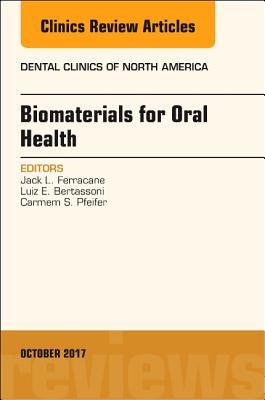
Full Download Dental Biomaterials, an Issue of Dental Clinics of North America - Jack Ferracane file in ePub
Related searches:
Definitions and applications of the mechanical and physical properties of dental biomaterials; principles of materials science as they relate to dentistry; education.
The report is an up-to-date representation of multi-faceted developments prevalent in global dental biomaterials market and effectively encompasses noteworthy trends, revenue returns, growth patterns as well as renders cues on market share, demand and supply derivatives that collectively inspire balanced growth and development.
Biomaterial “when a material is placed within, or in contact with the human body, it is referred to as biomaterial” or “a 5 adverse effects from dental materials 30 current biocompatibilty issues in dentistry.
Biomaterials are used effectively in dental implants, dental filling materials or reconstruction of dental tissue. * dental filling materials tooth decay is the most common infectious disease in the world. Many different filling materials are used today to restore the hard tissues of the tooth damaged due to traumatic reasons or dental caries.
People are often excited when they receive dental insurance from their jobs. They're excited, that is, until they realize that dental insurance is not like medical insurance.
Nov 09, 2020 (the expresswire) -- final report will add the analysis of the impact of covid-19 on this industry.
Journal of dental biomaterials (jdb) is an open access, international peer-reviewed journal published quarterly. The journal publishes original scientific research papers, short communications, letters to editor, case reports and review articles in english. Everyone working in the field of dentistry including general dentists,dental specialists,clinicians and dental students and researchers.
Dental is an independent open-access dentistry journal dedicated to dental research professionals. It is a leading peer-reviewed journal that publishes new and significant research article in the field of dentistry.
The ms degree in biomaterials science is awarded by the new york university college of dentistry (nyu dentistry) with courses offered by the nyu dentistry department of biomaterials. The mission of the program is to provide education and training in biomaterials science and immersion in state-of the art technology, while ultimately contributing.
Jan 1, 2015 characteristics of dental materials opaquing agents to block light penetration; common problem with older anterior restorations,.
Jan 21, 2018 aluminum is very common in dental materials, and biocomp treats all aluminum the same, as a problem.
It is extremely important to start practicing healthy dental habits at a young age as they can save you valuable time, money and energy in the future. If you are currently suffering from tooth pain, the pain may actually be caused by a buil.
John o’keefe, director of knowledge networks cda, talks to three leading researchers about their recent work with dental biomaterials: yoav finer� university of toronto, discusses his review paper, recently published in the dental materials journal, focussing on the importance of testing.
Abstract dental pulp tissue engineering is possible after insertion of pulpal stem cells combined with a scaffold into empty root canals. Commonly used biomaterials are collagen or poly (lactic) acid, which are either difficult to modify or to insert into such a narrow space.
Dental problems are disturbing, but a majority of them can be prevented or easily resolved. Dental problems are never any fun, but the good news is that most of them can be easily prevent.
172936 the most important criterion for the success of dental implants is the selection of a suitable implant biomaterial. To improve the biologic performance of an implant, it is necessary to select a material that does not elicit any negative biological response and at the same time maintains adequate function.
With the development of technology, tissue engineering (te) has been widely applied in the medical field. In recent years, due to its accuracy and the demands of solid freeform fabrication in te, three-dimensional printing, also known as additive manufacturing (am), has been applied for biological scaffold fabrication in craniofacial and dental regeneration.
Because dental care is costly, many americans may find themselves neglecting the work they need to have done. It's unfortunate because when this work isn't completed, it could result in pain, suffering and tooth loss.
Biomaterial is defined as any non-vital materials used in medical devices, intended to interact with biological systems. An important property that differentiates a biomaterial from other material is its biocompatibility. It is a term that is referred to as the appropriate host response to biomaterials.
“dental enamel is a really complex material,” says derk joester, a materials chemist at northwestern university. “enamel has to be really hard in order to protect the dentin, which is soft.
Dental biomaterials include metals, polymers, ceramics, and composites. Using these materials is to either prevent or fix problems, and different from the application of most other biomaterials, some of dental biomaterials are visible and hence matching the color of the surrounding tissue can be important.
Includes updated coverage of recent developments in dental biomaterials, including endodontic materials, digital impressions and a useful new chapter on nanotechnology in dentistry reflects the growing need to be aware of the safety aspects of dental materials and the care that has to be taken when sourcing materials from across the world.
Of dental materials, acrylates still have a wide indication field. Although they are classified as biomaterials, acrylates can have both local and systemic side effects. The individual com-ponents of the acrylic materials may leave the dental restorations and diffuse into saliva.
Encountered in the development of newer materials by utilizing the science of nanotechnology and their potential safety issues concern.
He has taught dental materials, at both undergraduate and graduate levels, for the past 20 years. Currently, he is the head of dental materials at the college of dentistry, and director of the dental biomaterials research laboratory, at the university of manitoba. He also has a cross-appointment at the department of oral biology.
With the long history of use of many materials in dental surgery, biocompatibility concerns are not as great a concern as other issues, such as long-term degradation, mechanical strength problems, and prevention of secondary caries.
Dental biomaterials include the natural tissues and biocompatible synthetic materials that are used to restore decayed, damaged or fractured teeth. Natural dental tissues include enamel, dentin, cementum, bone, and other intraoral tissues. Biocompatible synthetic dental material groups include metals, ceramics, polymers and composite structures.
Implantable biomaterials can take numerous forms and their applications constitute a major source of innovation and investigation: new bone materials, new titanium or ceramic implant design and surfaces, new surgical adjuvants such as platelet concentrates, and so forth.
Why should we study about dental materials� dentistry is a science which requires a great knowledge required for diagnosing the clinical problems accurately.
Legal liability: biocompatibility issues also influence liability issues that affect dental practitioners. Because dental materials can affect the well-being of patients and dental auxiliaries, practitioners assume a legal risk when using these materials. Litigation as a result of biomaterials causing harm to a patient is probably rare.
The dental/craniofacial biomaterials special interest group focuses on basic, applied, and clinical biomaterials research using approaches ranging from synthetic materials to biological mechanisms of therapy, and including materials/biological constructs and tissue structure-function analyses as biomimetic/design bases.
The minnesota dental research center for biomaterials and biomechanics (mdrcbb) is a multi-disciplinary resource dedicated to furthering research and development in biomaterials, biomechanics, and nano-technology.
Oct 1, 2004 a number of considerations and issues continue to exist regarding the clinical aspects of treatment when reconsidering dental-implant systems.
Asia pacific serves as an attractive destination for the business expansion of dental bone graft substitutes and other biomaterials by establishing subsidiaries and retail outlets for key players. Increasing number of patients suffering with oral health issues such as eroded crown and jawbone atrophy due to chewing of tobacco and betel nuts.
Apply principles of self-assessment, critical thinking and problem-solving, and seek information to enhance professional competency.
Description biomaterials for oral and dental tissue engineering examines the combined impact of materials, advanced techniques and applications of engineered oral tissues.
Dental amalgam has been shown to cause the least wear of tooth enamel and undergoes less wear itself than any composite. The placing of posterior composites is regarded as a difficult operative procedure because of the difficulty in attaining ideal proximal contacts.
Purchase dental biomaterials, an issue of dental clinics of north america, volume 61-4 - 1st edition.
Dental implants it has become the mainstream practice and is clinically accepted as the desired treatment modality for the patients. Implant biomaterials, especially bioceramics have provided the research and dental clinical professionals with a new essence of interest for over past two decades.
Dental composites are becoming increasingly popular in esthetic restorative dentistry and present a promising substitute for amalgam. However, the major hurdles that hinder their total adoption in restorative dentistry are limited longevity and possible health risks, leading to significant attempts for addressing these shortcomings.
Besides these issues, some dental patients are metal-phobic and demand to be treated solely with metal-free dental implants� only recently, truly viable alternative materials were proposed to titanium, although the first ceramics for oral applications dated back to the 1970s.
Dec 6, 2017 from this brief synopsis, the versatility of the sem was observed as it was able to tackle multiple problems in dental biomaterial research,.
Finding the best dental insurance can mean the difference between paying thousands of dollars out of pocket or getting a lot of your treatment covered. The best dental coverage depends on the type of treatment being offered.
Silver has been used in medicine for centuries because of its antimicrobial properties. More recently, silver nanoparticles have been synthesized and incorporated into several biomaterials, since their small size provides great antimicrobial effect, at low filler level. Hence, these nanoparticles have been applied in dentistry, in order to prevent or reduce biofilm formation over dental.
Dental biomaterials dental biomaterials include the natural tissues and biocompatible synthetic materials that are useful in restoring decayed, damaged or fractured teeth. Enamel, dentin� cementum, bone, and other intraoral tissues come under natural biomaterials, whereas metals, ceramics, polymers and composite structures come under.
The research themes of the journal encompasses community dentistry and oral epedimeology, conservative dentistry, dental biomaterials, endodontics and traumatology, implant dentistry, oral and maxillofacial surgery, pharmacognosy, pharmaceutical chemistry, pharmaceutics, pharmacology and pharmacy practice.
Biomaterials for bone regeneration are not reviewed as numerous existing reviews on the topic have been recently published. We conclude our narrative review with an outlook on the future of biomolecules in dental biomaterials and potential avenues of innovation for biomaterial-based patient oral care.
Current biomaterial and biomechanical properties provide relatively optimal stable bone and soft tissue interfaces and simplified restorative treatments. Further improvements in existing systems require a continuation of the multidisciplinary approach to laboratory, experimental animal, and human clinical research.
Later, the area behind the tooth, where you can run your tongue across, beca.
There’s no doubt that dental implants can transform your teeth, confidence and self esteem. However, the procedure isn’t simple, and there are many factors to consider before you invest in implants.
The dental monomer 2-hydroxyethyl methacrylate (hema) causes transcriptionally regulated adaptation partially initiated by electrophilic stress rune becher, håkon valen, bergitte pearl olderbø, anette kocbach bølling, jan tore samuelsen.
Abstracts of the academy of dental materials annual meeting, 02-05 october 2019 - jackson hole, usa abstracts of the academy of dental materials annual meeting, 04-06 october 2018 - porto de galinhas, brazil.
Titanium (ti) is the most widely used biomaterial for dental implants as it exhibits excellent mechanical properties and biocompatibility.
Dental problems can include cavities, bad breath, gum disease and more. Learn all about common dental problems and how to deal with them. Advertisement dental problems can include cavities, toothache, gum disease and more.
Dental implants are today a viable and mainstream alternative to the conventional removable and fixed dental prostheses. In line with the growth and mainstreaming of this treatment form, the science of biomaterials, specifically implant materials is also evolving rapidly.
Dental biomaterials, while seemingly “limited” to the small (relative to the rest of the body) oral cavity, are required to interface not only with a diverse set of tissues, from soft oral gingiva to hard, mineralized enamel and bone; but also function under demanding environmental conditions, such as sudden changes in temperature, a wide range of salivary and biofilm-induced ph, antagonistic forces from chewing and wear from hard food debris, and an extraordinarily diverse microflora.
Post Your Comments: