Download Ethics, Conflict and Medical Treatment for Children: From Disagreement to Dissensus - Dominic Wilkinson file in ePub
Related searches:
Ethics, conflict and medical treatment for children: From
Ethics, Conflict and Medical Treatment for Children: From Disagreement to Dissensus
Ethics, Conflict and Medical Treatment for Children - 1st Edition
Ethics Conflict and Medical Treatment for Child - 9780702077814
Ethics, Conflict and Medical Treatment for Children – From
Open Access Book: Ethics, Conflict and Medical Treatment for
Ethics, Conflict and Medical Treatment for Children : From
'Ethics, Conflict and Medical Treatment for Children
Ethics, Conflict and Medical Treatment for Children Oxford
Ethical Guidelines and Practices for US Military Medical - Health.mil
Book Launch for 'Ethics, Conflict and Medical Treatment for
Ethics, Conflict and Medical Treatment for Children - The
Ethics, conflict and medical treatment for Oxford Martin
How ObamaCare Creates Ethical Conflicts For Physicians And
Code of Ethics for Medical Coding/Billing Specialists Work - Chron.com
Dissensus and value pluralism - Ethics, conflict and medical
Principles of Clinical Ethics and Their Application to Practice
Dominic Wilkinson and Julian Savulescu, Ethics, Conflict and
Ethical Aspects of Clinical Practice Medical Education and Training
Case Studies in Medical Ethics and Bioethics
An ethical algorithm for rationing life-sustaining treatment during the
Knowledge about medical ethics and conflict resolution during
When Law and Medical Ethics Conflict: The Case of Mohammad
Making medical decisions for children: ethics - University of
When Patients Refuse Treatment: Medical Ethics Issues for
Ethics Consultations and Conflict Engagement in Health Care
Ethical Conflicts Between Patient and Physician Are Common in
Medical Ethics Training Online - & Compliance for Organizations
Lecture and Book Launch: Ethics, Conflict and Medical
Ethics and Human Rights American Nurses Association
Charlie Gard: the Book — Ethics, Conflict and Medical
Medical Ethics Compliance - & Compliance for Organizations
(PDF) Medical Ethics in Peace and in the Armed Conflict
“Ethical Dilemmas in Healthcare-Case Studies and Lessons Learned”
Bioethics and Ethical Dilemmas Arcadia Hospital
On the ethics of withholding and withdrawing medical treatment
Conflict Between Professional Ethics and Practice Demands
He is co-author (with julian savulescu) of “ethics, conflict and medical treatment for children, from disagreement to dissensus”, and editor and associate editor of the journal of medical ethics from 2011-2018.
Ethical issues frequently arise in health care, according to a march 2013 article on the anm healthcare website, which noted quality, access, an ethical workforce, end-of-life care, and the allocation of scarce resources as major health care topics facing americans today.
The american nurses association (ana) center for ethics and human rights was established to help nurses navigate ethical and value conflicts, and life and death decisions, many of which are common to everyday practice. The center develops policy designed to address issues in ethics and human rights at the state, national, and international levels.
Lecture and book launch: ethics, conflict and medical treatment for children – from disagreement to dissensus 11 october 2018 watch the lecture by professors dominic wilkinson and julian savulescu at the book launch for ‘ethics, conflict and medical treatment for children’, which took place on 4 october at the oxford martin school.
*corresponding patients may refuse emergency medical treatment during their evaluation and treatment.
Consent to treatment is central to the nurse-patient relationship and it is the patient’s decision alone as to whether they accept or reject treatment. As nurses broaden their scope of practice, issues surrounding patient consent to treatment are becoming increasingly important (anon 1997).
Such interventions, including life-sustaining medical treatments, are ethically justified only if both of the following necessary conditions have been met: (1) the treatment must be medically indicated; and (2) there must be a consent for the indicated treatment.
Ethics, conflict and medical treatment for children: from disagreement to dissensus.
In the clinical settings we often encounter sensitive issues such as informed consent, truth telling, confidentiality, end of life care and patients right. As medical social workers, we have received referrals of patients seeking to be discharged against medical advice, patients refusing blood transfusion, patients refusing amputation of malignant limbs, relations refusing.
Ethical decision making will have an impact on your clinical professional role, your leadership role, and your research role. Ethical decision making is required when there is an ethical dilemma. Ethical dilemmas occur when there is a conflict between two or more ethical principles.
Force-feeding of hunger striking prisoners is a good example for how medical professionals are sometimes requested to execute national policy. In this context, tensions arise when the state law conflicts with the professional-ethical code.
Mar 3, 2015 when the science of medicine is imprecise or evolving, conflict can arise about the most appropriate treatment plan for a patient given an array.
Health care providers are expected to provide ethical care at all mes, even when the paent‐provider ethics issue quick reference: patient-provider conflict.
Ethics, conflict and medical treatment for children: from disagreement to dissensus,.
Ethics is the branch of philosophy that deals with morality and how it shapes behavior. Different branches of the study of ethics look at where our views of morality come from and how they shape our everyday lives.
Lecture and book launch: ethics, conflict and medical treatment for children – from disagreement to dissensus 11 october 2018 watch the lecture by professors dominic wilkinson and julian savulescu at the book launch for ‘ethics, conflict and medical treatment for children’, which took place on 4 october at the oxford martin school, university of oxford.
Ethics conflicts occur when there is uncertainty, a question, or a conflict regarding competing ethical principles, personal values (morals), or professional and organizational standards of practice (group morality) or, when one considers violating an ethical principle, personal value, or ethical standard of practice.
Jan 5, 2016 these difficult dilemmas may concern medical treatments, practices, hospital management and other matters that arise in the healthcare industry.
Medical ethics is based on a set of values that professionals can refer to in the case of any confusion or conflict. These values include the respect for autonomy, non-maleficence, beneficence, and justice. Such tenets may allow doctors, care providers, and families to create a treatment plan and work towards the same common goal.
Ethics, conflict and medical treatment for children: from disagreement to dissensus. Description what should happen when doctors and parents disagree about what would be best for a child? when should courts become involved? should life support be stopped against parents’ wishes? the case of charlie gard reached global attention in 2017.
The biggest issue in medical ethics today is the growing occurrence of conflict between health care providers, their patients and patients' families over treatment options, according to canadian.
Ethics conflicts in rural communities: two case studies will highlight some of the ethics conflicts and the benefits and risks involved in medical treatment.
Global medical ethics on the basis of the general declaration of human rights by the united nations is a key subject for the 21st century.
Ethics, conflict and medical treatment for children: from disagreement to dissensus [wilkinson mbbs bmedsci mbioeth dphil fracp frcpch, dominic, savulescu bmedsci mbbs ma phd, julian] on amazon.
In this paper the pros and cons of using placebo are discussed from the point of view of ethical theories and principles. The effects of placebo are exemplified by findings from previous studies, and an authentic case serves to illustrate ethical dilemmas arising both for the caregiver and the patie.
Ethics committee members or consultants should be available around the clock to assist employees, patients and families, and can be called on to help resolve a perceived conflict between the parties. These consultants need to be well grounded in the hospital’s policies and should have additional ethics training.
What is an ethical dilemma? ethical dilemmas may arise for patients, family members, medical staff members and physicians alike. Some of the issues surrounding problems for which ethics consultation may be requested include: advance directives; surrogate decision making; refusal of treatment; conflicts with caregivers; foregoing life-sustaining treatment.
The ethical guidelines in place today were primarily a response to past abuses, the most notorious of which in america was an experiment in tuskegee, alabama, in which treatment was withheld from 400 african american men with syphilis so that scientists could study the course of the disease.
Again there is a conflict between the child's interests and parental.
The three types of ethics include descriptive ethics, normative ethics and metaethics, explains lander university’s philosophy department. Each type has a the three types of ethics include descriptive ethics, normative ethics and metaethics.
2 the primary objective of the medical profession is to render service to humanity; reward or financial gain is a subordinate consideration. Under no circumstances may physicians place their own financial interests above the welfare of their patients.
The primary objective of the medical profession is to render service to humanity; reward or financial gain is a subordinate consideration. Under no circumstances may physicians place their own financial interests above the welfare of their patients. Treatment or hospitalization that is willfully excessive or inadequate constitutes unethical practice.
Medical ethics in death - medical ethics in death concern end-of-life decisions like health care power of attorney and living wills. Advertisement we've described the difficulties of defining death.
The four principles of health care ethics are autonomy, beneficence, non-maleficence, and justice. The basic definitions of each of the four principles of health care ethics are commonly known and used often in the english language, but they take on special meaning when being utilized in a medical setting.
The four principles of health care ethics developed by tom beauchamp and james childress in the 1985 principles of biomedical ethics provide medical practitioners with guidelines to make decisions when they inevitably face complicated situations involving patients. The four principles of health care ethics are autonomy, beneficence, non-maleficence, and justice.
Jun 26, 2005 medical ethics today is the growing occurrence of conflict between health care providers, their patients and patients' families over treatment.
Aug 20, 2019 learn how medical ethics play a major role in clinical life, and health care as they treat patients on a wide scale of wealth, education, and health. There are some circumstances where ethical conflicts in healthc.
Ethics is about trying to make the best possible choice among tough choices. What types of case might keep a bioethicist up at night? it’s always distressing when a patient who is dependent on life-sustaining medical treatment that you think could have a good quality of life wants to stop that treatment.
When there is uncertainty or disagreement, the bioethics committee can help. The bioethics committee is a group of physicians, nurses, social workers, chaplains, other staff members and members of the community who are available to help patients, families, doctors and other health care provides when they face difficult ethical decisions.
Sep 6, 2017 investigators explored futility in emergency medicine, as well as the ethical aspects of denying treatment based on the perception of treatment.
Values is called an “ethical dilemma,” or a “moral conflict. ” as an example, let us it is this type of ethical problem that we often treat in traditional medical ethics.
There is hardly an area in medicine that doesn't have an ethical aspect.
Watch the lecture by professors dominic wilkinson and julian savulescu at the book launch for 'ethics, conflict and medical treatment for children', which took place on 4 october at the oxford martin school, university of oxford.
Professor dominic wilkinson is director of medical ethics and professor of medical ethics at the oxford uehiro centre for practical ethics, university of oxford. He is a consultant in newborn intensive care at the john radcliffe hospital, oxford.
Coding and billing specialists play an important role in the health care system because they serve as the translator between service providers and insurance companies.
Ethics, conflict and medical treatment for children: from disagreement to dissensus synopsis: recent cases of conflict around medical treatment for seriously ill infants and young children have raised a number of questions about the nature, consequences and ethics of disagreement in neonatal intensive care.
Clinical ethics: the branch of bio-ethics that addresses ethical conflicts that arise in daily clinical practice in health care institutions through the establishment of hospital ethics committee and ethics consultation services.
While knowledge of medical facts is important, decisions about life-prolonging treatment are also clearly dependent on ethical values and ethical evaluation. There are two opposite problems that could arise from a dissensus approach to providing medical treatment.
Consider what is sometimes described as a conflict between the duty to instill hope and the duty to be truthful in cancer treatment. Some believe that the concerns and fears of the moment can undermine rational deliberation and justify not telling the whole truth. Imagine, then, a physician torn whether to give a cancer patient with generally.
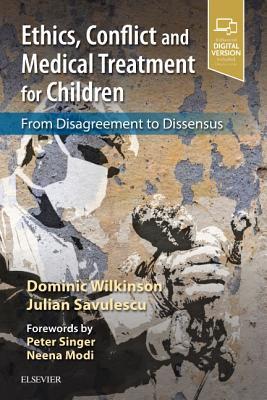
Ethics, conflict and medical treatment for children: from disagreement to dissensus. In this book, medical ethicists dominic wilkinson and julian savulescu critically examine the ethical questions at the heart of disputes about medical treatment for children.
Reexamining the ethical tenets of medicine and their application in new physicians must keep in mind the distinctions and potential conflicts between legal and seek consultation when necessary, and treat the patient with compassi.
The ethics committee of the organization that ran the group home then had to decide if the woman's right to decide whether or not to protest -- regardless of how irrational her reasons -- overrode her right to compensation for inappropriate medical treatment.
Medical and social ethics have advanced to an extent that doctors are likely to be faced with controversial issues on a regular basis. Euthanasia, information sharing and the use of human tissues are typical examples.
We’ll examine some common physician conflicts of interest before and after obamacare, and discuss how patients can best protect.
Search the aspr tracie resource library and view tailored topic collections comprised of current healthcare system preparedness resources. A self-service collection of disaster medical, healthcare, and public health preparedness materials,.
A general rationale is presented for withholding and withdrawing medical treatment in end-of-life situations, and an argument is offered for the moral irrelevance of the distinction, both in the context of pharmaceutical treatments, such as chemotherapy in cancer, and in the context of life-sustaining treatments, such as the artificial ventilator in lateral amyotrophic sclerosis.
This new book critically examines the core ethical questions at the heart of disputes about medical treatment for children. The contents review prominent cases of disagreement from the uk and internationally and analyse some of the distinctive and chal.
Patient autonomy is the most basic right of every individual and an example of a medical ethics dilemma. Autonomy means patient autonomy is the most basic right of every individual and an example of a medical ethics dilemma.
When pandemics and other widespread medical emergencies do overwhelm the capacity of medical facilities, even starker ethical questions arise. Healthcare professionals, who are themselves at risk of infection, may be forced to decide which patients should receive treatment or access to lifesaving equipment and treatment when need exceeds capacity.
In this book, dominic wilkinson and julian savulescu seek to draw lessons from the charlie gard cases 1 and, in particular, to ensure that any disagreement between medical staff and parents about the care of a child does not lead to conflict, especially not one as bitter and damaging as in that case.
In this book, medical ethicists dominic wilkinson and julian savulescu critically examine the ethical questions at the heart of disputes about medical treatment for children. They use the gard case as a springboard to a wider discussion about the rights of parents, the harms of treatment, and the vital issue of limited resources.
Medical ethics is an applied branch of ethics which analyzes the practice of clinical medicine and related scientific research. Medical ethics is based on a set of values that professionals can refer to in the case of any confusion or conflict. These values include the respect for autonomy, non-maleficence, beneficence, and justice.
Revealed in 1972, the study sparked a conflict around medical ethics, leading to new medical standards. After the great depression put halt to the initial 1929 syphilis treatment study, curiosity about race and untreated syphilis drove phs officer taliaferro clark to design a new study in 1932.
A “medical ethics”) is the application of the core principles of bioethics (autonomy, beneficence, nonmaleficence, justice) to medical and health care decisions. It is a multidisciplinary lens through which to view complex issues and make recommendations regarding a course of action.
“the tragedy is that so many people look for self-confidence and self-respect everywhere except within themselves, and so they fail in their search. ” dr nathaniel branden in all aspects of our lives we find ourselves evaluating our worth.
Mar 25, 2010 neonatology is a field that has always been rife with ethical conflict. In the for cases in which parents refuse recommended medical treatment,.
A model to resolve conflicts when ethical principles collide is presented. Autonomy obliges the physician to disclose medical information and treatment options.
Ethics, conflict and medical treatment for children dominic wilkinson and julian savulescu.
An introductory booklet on medical ethics for health care and medical students. It presents a systematic approach to ethical dilemmas in clinical practice with worked examples.
This also helps avoid ethical conflicts, confusion, and misunderstanding between attention to ethical issues in clinical medicine has increased in recent.
The editors of the textbook military medical ethics conclude that a military physician is a “physician first, officer second” and that “instances of significant conflict” between civilian.
The ethics committee at alta bates summit medical center helps patients, families surrogate decision making; refusal of treatment; conflicts with caregivers.
Refusal of treatment: in a case of refusal of treatment, pecs face ethical conflicts addressing two basic principles: beneficence and respect for patient autonomy.
For example, a patient may refuse care due to cultural/religious views, or may want an unnecessary treatment which may not be in his or her best interests; euthanasia is another example of a provider's sense of morals conflicting with his or her ethical obligations. As new medical technologies come along such as medical biotechnology, the ethics of using medical practices will continue to be evaluated, updated, and taught.
From opposite sides of the debate wilkinson and savulescu provocatively outline the strongest arguments in favour of and against treatment. They analyse some of the distinctive and challenging features of treatment disputes in the 21 st century and argue that disagreement about controversial ethical questions is both inevitable and desirable. They outline a series of lessons from the gard case and propose a radical new ‘dissensus’ framework for future cases of disagreement.
Uncertainty about outcomes can make planning goals of care difficult, or if misunderstandings between patient, families, and medical staff occur, may drive conflict over treatment proposals. Ethical issues that arise during critical illness include balancing benefits, burdens, and harms of therapy in the face of uncertainty; maintaining a helpful degree of transparency and communication about medical standards of care at an institution; understanding and respecting religious and cultural.
Jan 10, 2020 scenario 6: physician assisting terminal patient hides information about experimental treatment.
This article has been written by nishtha jain, a fourth year student from symbiosis law school, noida. She discusses the approaches taken by professionals to resolve conflicts between medical laws and ethics, position of medical laws and ethics in india along with landmark judgements.
Document your efforts to educate the patient, the rationale for your recommended treatment, and the patient’s refusal of care. Clinical ethics: a practical approach to ethical decisions in clinical medicine.
Ethics, conflict and medical treatment for children with dominic wilkinson and julian savulescu.
Reasons why parents do not consent to medical treatments and interventions are the ethical principles that underpin the processes of informed consent and have noted that conflicts with mainstream medical practice can create tensio.
These minority cultures living in the us are faced with extreme turmoil and conflict when their personal beliefs do not match those held by those who are providing medical treatment. Through the debate of consequentialist versus deontological schools of thought, paternalism versus individual autonomy and the concepts presented in ethics for medical.
Withholding or withdrawing a life-sustaining treatment tends to be very challenging for health care providers, patients, and their family members alike. When a patient’s life seems to be nearing its end, it is generally felt that the morally best approach is to try a new intervention, continue all treatments, attempt an experimental course of action, in short, do something.
The 4 cardinal principles of biomedical ethics-autonomy, beneficence, nonmaleficence, and justice-are widely accepted as standard ethical principles in medicine. 2 the conflict between autonomy and beneficence/nonmaleficence often leads to distress among health care professionals, as well as patients and their families, and frequently manifests in psychiatric consultations for evaluation of the patient’s capacity to make medical decisions or to refuse recommended treatment.
Post Your Comments: